
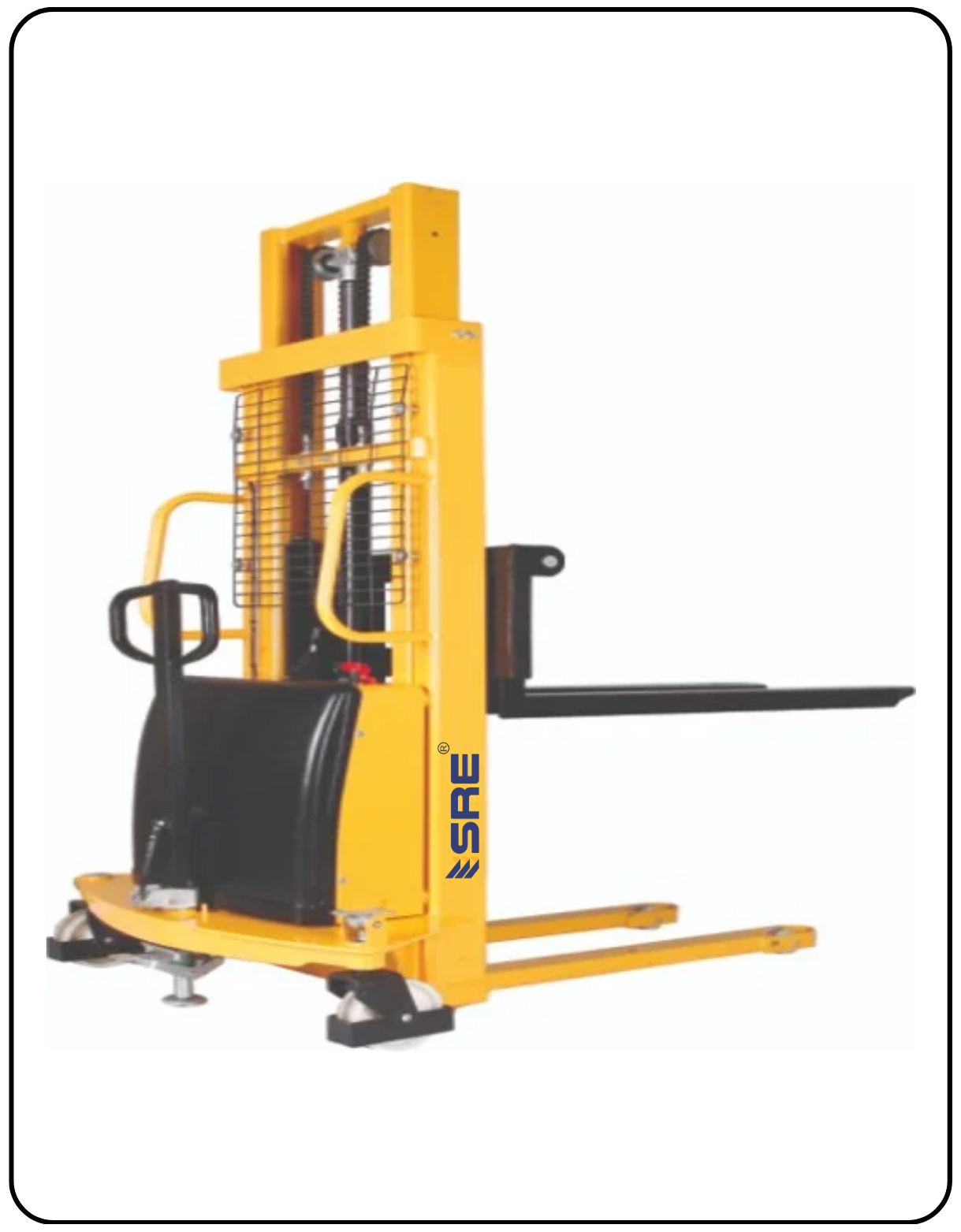
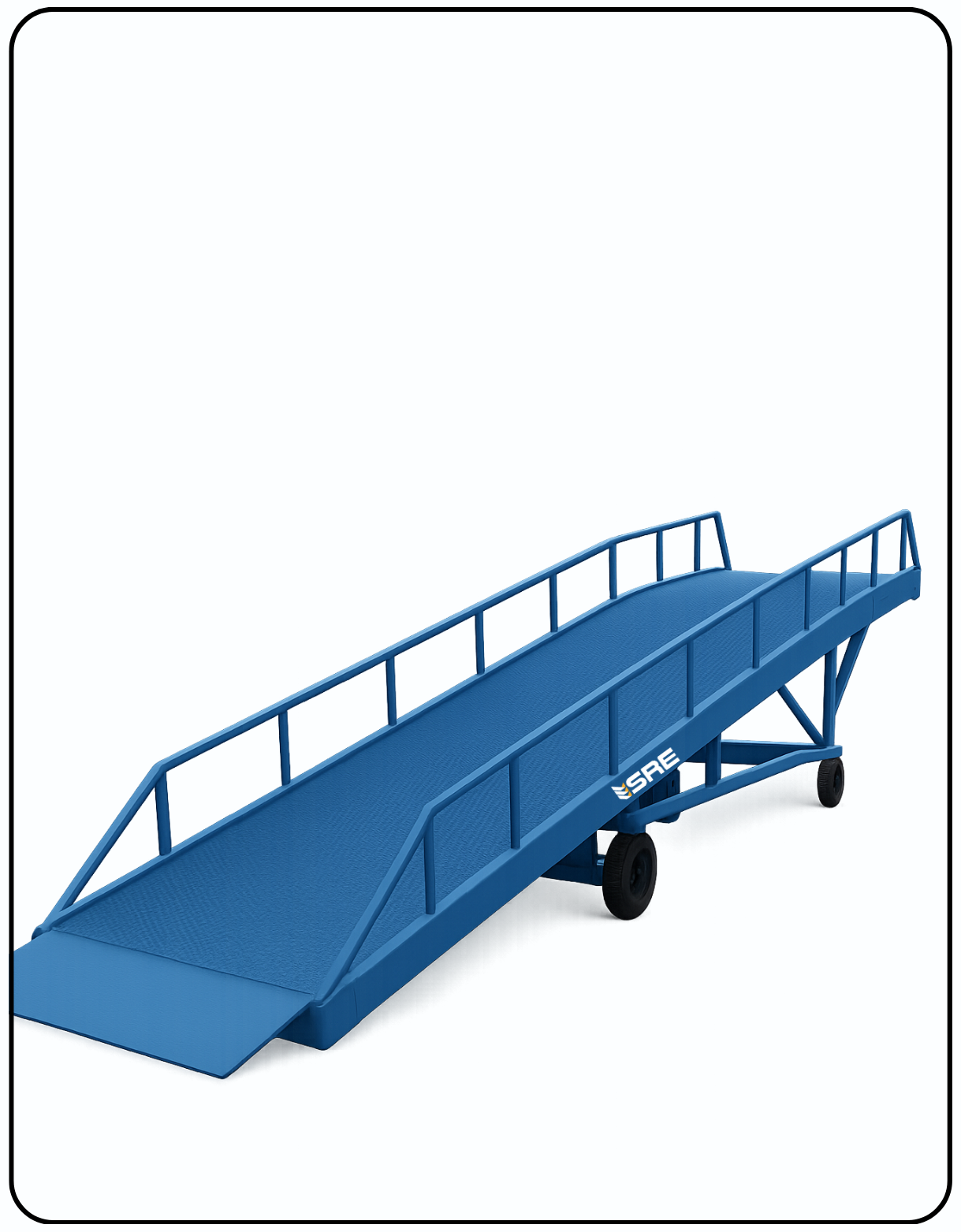
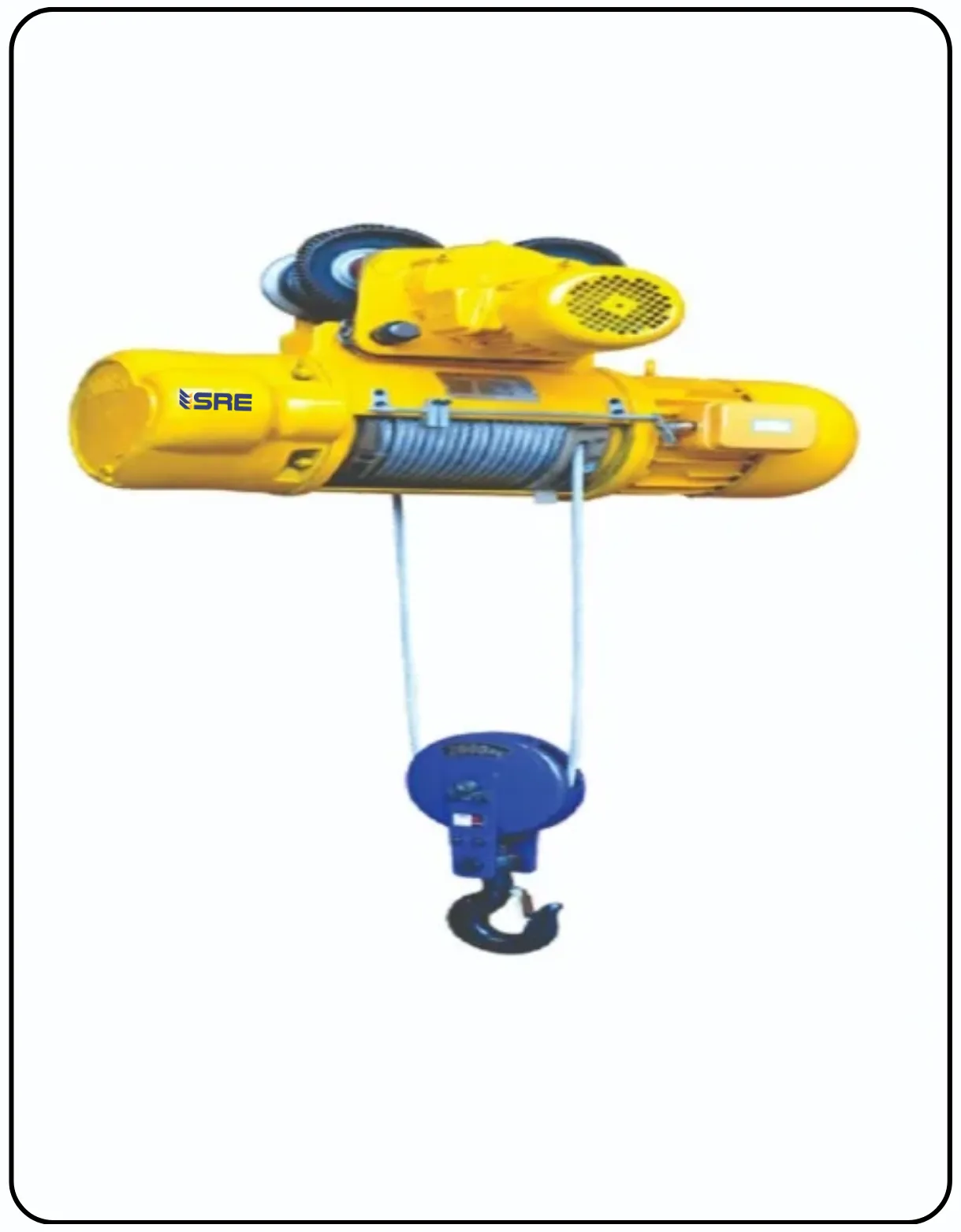
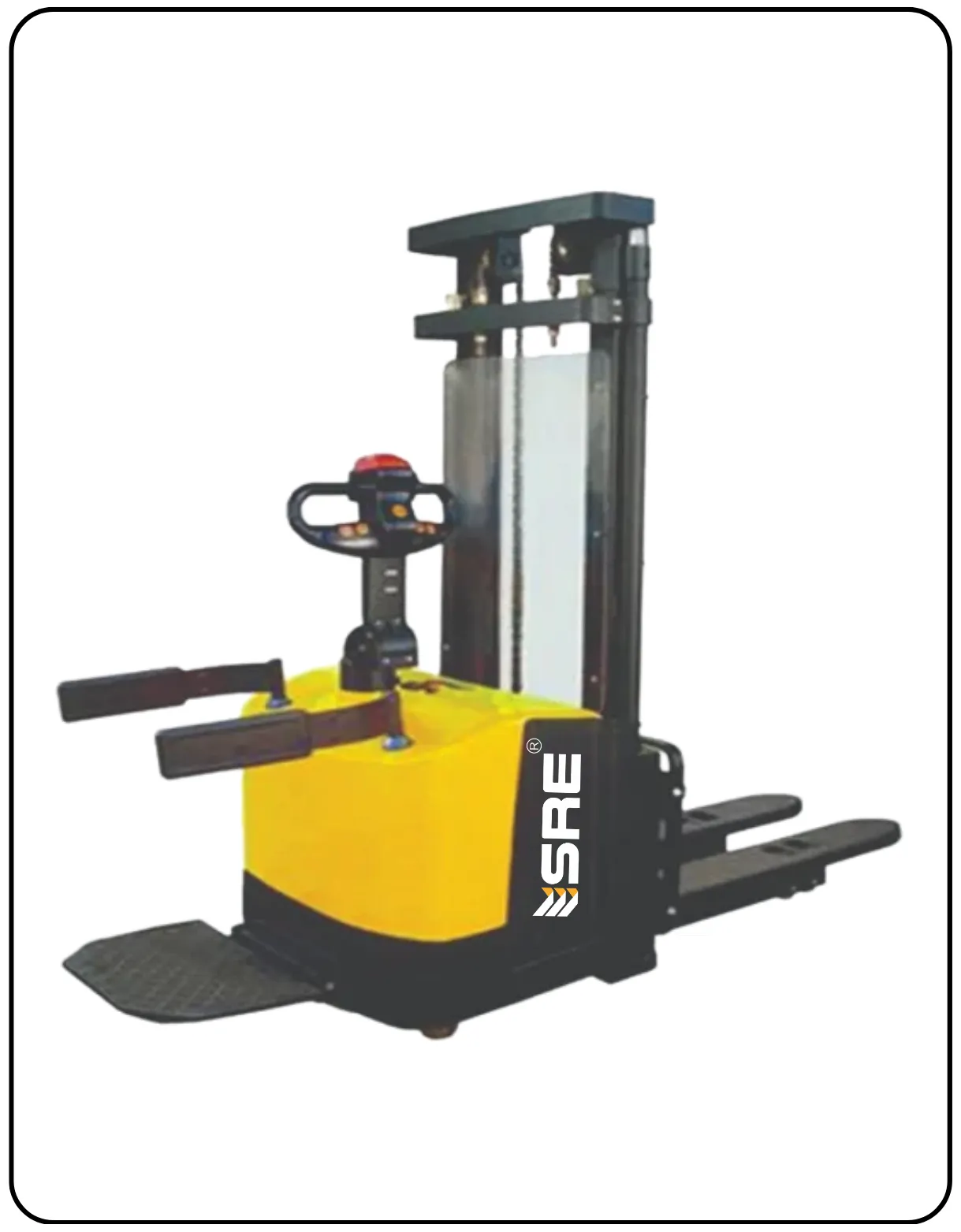
SRE Material Handling Equipment Pvt. Ltd.: Manufacturer, Supplier, And Exporter Of Semi Battery Stacker in India.
SRE Material Handling Equipment Pvt. Ltd., Manufacturer and Supplier of Semi-Battery Stacker in Chakan.
Our Manufacturing Unit is in Ahmedabad, Vadodara, and Rajkot, Gujarat, India.
Semi Battery Stackers in Chakan: A Practical Lifting Choice for Today’s Industrial Work
Introduction
In the day-to-day running of warehouses and manufacturing plants, how materials travel often dictates the overall smoothness of the facility. Over the past 10 years, industrial activity, especially in centers like Chakan, has rapidly transformed. Work volumes have grown, delivery deadlines have become tighter, and safety standards are significantly higher than previously.
Warehouse proprietors, plant supervisors, and operations leads frequently face the same workplace realities: limited staff, rising worker fatigue, pressure to move goods quickly, and the constant need to prevent accidents and product damage. Older methods of moving items by hand are struggling to keep up.
This is where the Semi Battery Stacker has appeared as a sensible intermediate choice—providing motorized lifting assistance without the intricacy or expense of fully electric setups. For many sites in Chakan’s industrial zone, it represents a logical improvement rather than a complete system change.
The Evolving Requirements of Modern Warehouses and Industries
Industrial areas such as Chakan are no longer dealing with predictable, low-volume tasks. Sectors such as automotive, engineering, fast-moving consumer goods, and pharmaceuticals, as well as supporting manufacturing units, all face variable demand and stricter shipping schedules.
Inside the facility, this translates to frequent pallet relocation, higher stacking heights, and repeated lifting throughout the workday. Operations personnel often spot blockages forming, not due to production slowdowns, but because of inefficient internal product movement.
Manual equipment imposes a substantial physical burden on the handlers. Fully powered equipment, while effective, might not always fit space limitations, budgets, or upkeep capabilities. Consequently, many premises seek machinery that boosts effectiveness without adding operational complexity.
Defining a Semi Battery Stacker
A semi-battery stacker is best understood by observing its typical application rather than through a technical definition. It’s a material-handling aid powered by a battery system, with movement usually achieved manually or with minimal assistance.
Practically speaking, this means handlers avoid strain when raising loads vertically. The battery-operated lifting mechanism ensures a smooth, controlled ascent, while its compact design makes the machine easy to steer in storage areas and production halls.
It is frequently selected by sites aiming to lessen the physical toll of lifting without needing constant powered travel over long distances.
Why Semi Battery Stackers Are Superseding Standard Manual Gear
In many stockrooms, manual stackers and traditional forklifts have been in use for years. Nevertheless, practical experience reveals apparent limitations.
Manual stackers rely entirely on the operator’s strength, which leads to fatigue and inconsistent performance. As a shift progresses, lifting pace declines, and safety risks climb. Forklifts, conversely, require more room, specially trained drivers, and greater maintenance attention.
The Semi Battery Stacker fills this gap. By automating the most strenuous task—vertical elevation—it enables operators to sustain output over more extended periods with steady efficiency. This balance is why many businesses are gradually swapping out manual gear instead of making abrupt equipment transitions.
Efficiency Boosts in Daily Tasks
In routine warehouse activities, small time reductions, repeated hundreds of times, accumulate rapidly. With semi-battery stackers, handlers can lift pallets quickly and with less exertion.
The controlled lift speed ensures uniform handling throughout the workday. Morning and evening outputs remain steadier because performance is no longer tied to physical depletion.
Operations managers often witness smoother flows, particularly in loading, unloading, and interim storage areas. Fewer breaks between actions directly improve overall throughput.
Enhancing Safety on the Job
Workplace accidents frequently stem from repetitive stress and incorrect lifting techniques. In facilities heavily dependent on manual stackers, back issues and muscle tiredness are frequent worries.
A semi-battery stacker reduces these risks by removing the load from the operator during lifting. Smoother movement reduces sudden jolts, improving steadiness when stacking loads high up.
From a safety supervisor’s viewpoint, fewer manual lifts result in reduced injury reports, less time lost, and better adherence to internal safety protocols.
Managing Heavier Loads More Easily
Modern storage facilities now handle heavier pallets and achieve higher stacking heights than in the past. Manual apparatus struggles to maintain stability as loads increase.
Semi-battery stackers are engineered to handle heavier loads with improved stability. The powered lifting feature ensures steady raising, minimizing load oscillation.
For operations dealing with dense products or valuable inventory, this stability translates into fewer damages and more assured handling.
Technology and Workflow Effectiveness
Although not overly intricate, the battery and lifting assembly of a semi battery stacker are vital for daily efficiency. Dependable batteries provide predictable performance throughout shifts.
Compared to fully electric machinery, the system remains simpler, reducing reliance on highly specialized maintenance staff. For businesses prioritizing operational uptime and reliability, this equilibrium is often preferred.
Following proper charging practices and routine basic checks usually keeps the devices running with minimal interruption.
Optimizing Space and Navigating Tight Areas
Space constraints are a frequent hurdle in older storage buildings and compact factory floor plans. Large traditional forklifts may not be suitable for narrow passageways or crowded stacking zones.
The reduced physical size of a Semi Battery Stacker permits fluid movement in confined spots. Handlers can navigate tight aisles without sacrificing security or speed.
This capability makes it particularly valuable in facilities where expanding the physical layout is not an option.
Value Over the Long Term
Assessing cost involves looking beyond the initial purchase outlay. Over time, lower injury rates, reduced operator exhaustion, and fewer maintenance incidents generate tangible savings.
Facilities utilizing semi-battery stackers frequently report needing fewer personnel for demanding lifting tasks. Consistent output also minimizes delays and the necessity for corrective actions.
From a purchasing perspective, the enduring value lies in balanced capabilities and manageable operating expenses.
Sustainability and Adherence to Regulations
Current industrial sites are increasingly focused on greener processes and meeting regulatory benchmarks. Semi-battery stackers aid this transition by reducing the physical burden and boosting energy efficiency.
Electric-powered lifting removes localized emissions, leading to cleaner indoor environments. This aligns with growing workplace health and environmental compliance standards.
Fitting into Factory and Warehouse Flow
A key benefit of semi-battery stackers is their flexibility. They fit seamlessly into established routines without demanding significant alterations to space or procedures.
In locations ranging from storing raw inputs to stacking finished items or expediting shipments, they supplement existing methods for moving goods.
Work teams can deploy them precisely where lifting assistance is most necessary, foregoing the need to overhaul entire operations.
Operator Instruction, Simplicity, and Upkeep
User-friendliness is a significant plus. Typically, staff need only brief instruction to operate semi-battery stackers both safely and effectively.
Upkeep procedures are straightforward, focusing on battery care, routine lubrication, and standard checks. Scheduled servicing minimizes unforeseen failures.
For manufacturing plants with fewer technical personnel, this straightforwardness offers a tangible advantage.
The Importance of Selecting a Trustworthy Maker
The performance of any equipment for handling materials largely depends on its construction quality and the availability of backup services. A reputable manufacturer guarantees uniform standards, correct safety adherence, and readily available replacement components.
Firms such as SRE MATERIAL HANDLING EQUIPMENT PRIVATE LIMITED concentrate on actual industrial requirements, providing gear built for actual use scenarios rather than theoretical metrics.
Assessing a manufacturer’s background, service accessibility, and compliance record helps secure enduring dependability.
Summary
For facilities in Chakan, enhancing material movement is less about adopting the latest gadgetry and more about selecting the right tool for day-to-day tasks. The Semi Battery Stacker offers a balanced solution—reducing physical effort, improving Safety, and enabling steady output.
For supervisors aiming to upgrade functions without adding complexity, this represents a sensible, well-matched progression. Investigating dependable suppliers and grasping genuine operational demands is the optimal starting point.
Main Points to Note
- Throughput: Quicker, more consistent lifting across all shifts
- Wellbeing: Decreased muscular strain and accident potential
- Load Management: Steady and controlled handling of heavier pallets
- Expense Savings: Gains in operating costs over time
- Sector Movement: Practical step from purely manual to assisted equipment
Trending FAQs
Q1. Is a semi-battery stacker suitable for small warehouses in Chakan?
Yes. Its compact design and manual movement make it ideal for small and medium-sized facilities.
Q2. How much maintenance does a Semi Battery Stacker require?
Routine checks and proper battery care are usually sufficient, keeping maintenance predictable.
Q3. Can operators learn to use it quickly?
Most operators adapt with basic training, as the controls are intuitive and straightforward.
Q4. Is it safer than manual stackers?
Yes. Powered lifting significantly reduces physical strain and improves control during stacking.
Contact us today for reliable material handling solutions support. Call +91 9316 208879 or sremhepvtltd2025@gmail.com for assistance now.
#SemiBatteryStacker #MaterialHandlingSolutions #WarehouseEfficiency #IndustrialSafety #ChakanIndustries #SmartLifting #SREMaterialHandling #FactoryOperations #LogisticsSupport