
SRE Material Handling Equipment Pvt. Ltd.: Manufacturer, Supplier And Exporter Of Scissor Lift Table With Roller in India.
SRE Material Handling Equipment Pvt. Ltd., Manufacturer And Supplier Of Scissor Lift Table With Roller in Vadodara.
Our Manufacturing Unit is in Ahmedabad, Vadodara, and Rajkot, Gujarat, India.
Scissor Lift Table With Roller in Vadodara: A Practical Solution for Modern Industrial Workflows
In today’s rapidly evolving industrial and warehousing landscape, operations are under relentless pressure to move more, move faster, and move safer. Across factories, warehouses, and distribution centers, teams are tasked with handling higher volumes, tighter schedules, and stringent safety standards. In daily warehouse operations—whether loading, unloading, positioning goods for assembly, or transferring heavy materials between workstations—labor fatigue and inefficiency are recurring challenges that erode productivity and morale.
This is where a Scissor Lift Table With Roller emerges not as a novelty, but as a practical tool that addresses real operational challenges. In this blog, we explore how this equipment fits into modern workflows, why it is replacing traditional manual methods, and how decision‑makers can benefit from adopting it in facilities across Vadodara and beyond.
The Changing Needs of Modern Warehouses and Industries
Warehouses and industrial facilities are no longer static spaces where goods sit until they are moved. Today’s operations demand dynamic internal logistics: fast throughput, accurate material placement, quick turnaround for orders, and seamless integration with automation and manual labor alike.
Many facilities face:
- Rising throughput demands driven by e‑commerce and just‑in‑time manufacturing.
- Labor shortages and higher labor costs.
- Safety compliance pressures to reduce musculoskeletal injuries.
- Shift variability, where consistent performance across teams and shifts is crucial.
In daily operations, workers often spend significant time bending, lifting, pushing, or pulling heavy items. These repetitive tasks contribute to fatigue, slow down processes, and increase the likelihood of injuries. For operations heads and procurement teams, the challenge is clear: find equipment that reduces manual strain while boosting throughput and safety.
What Is a Scissor Lift Table With Roller?
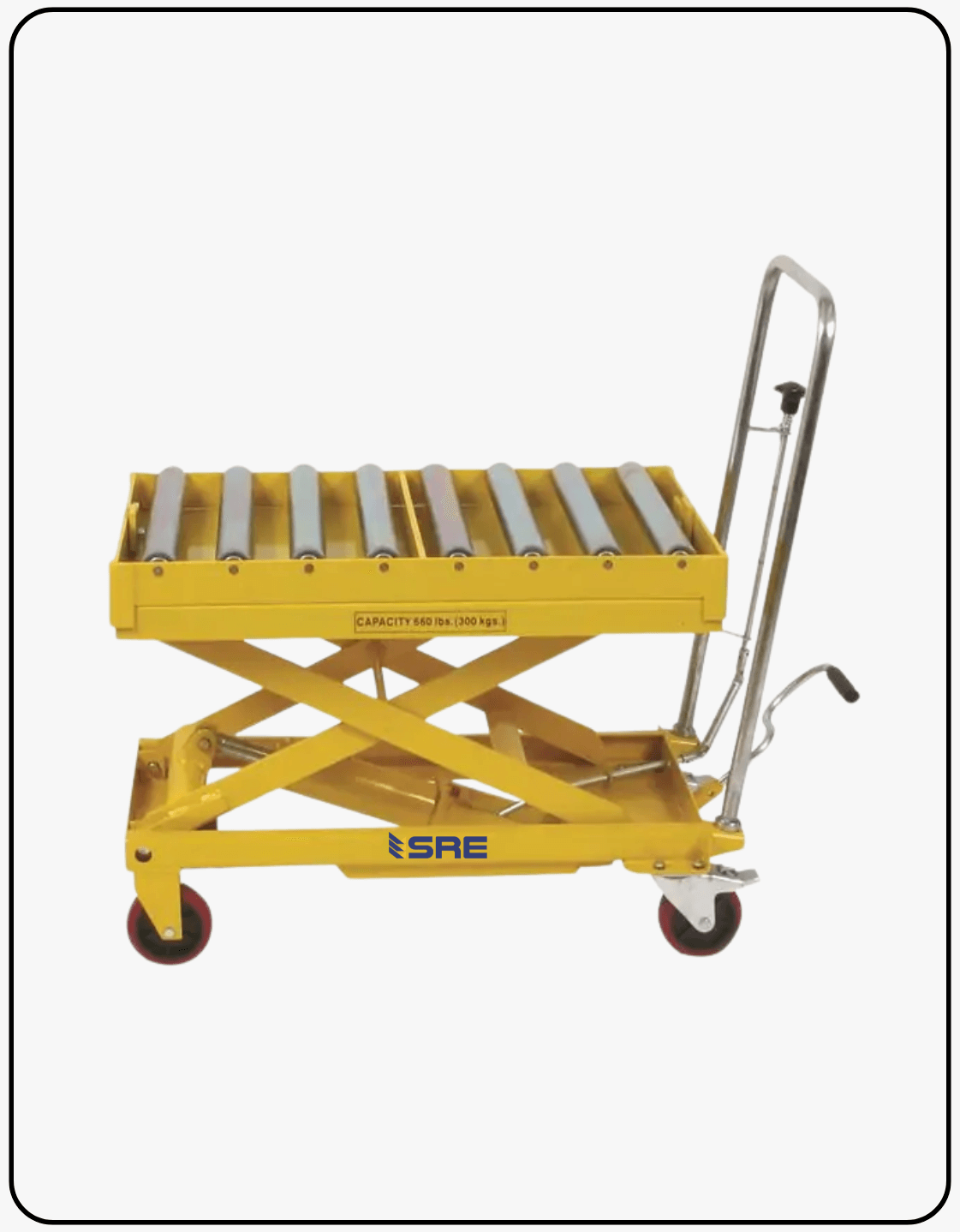
In practical industrial terms, a Scissor Lift Table With Roller is a material‑handling device that combines the vertical lift capability of a scissor lift table with a set of rollers on the tabletop surface. The rollers allow loads to be moved horizontally with minimal effort once they are lifted to the working height.
Think of it as a workplace assistant: it brings heavy loads to the right height for operators and then, thanks to its roller surface, facilitates easy sliding of goods to and from conveyors, packing stations, or pallet positions.
This is not a theoretical definition—it’s grounded in everyday usage. Maintenance teams use it to position machine parts; warehouse associates use it to transfer cartons to conveyors; and assembly lines use it to stage heavy sub‑assemblies at ergonomic heights. The result is less manual handling and more efficient workflows.
Why Scissor Lift Tables With Roller Are Replacing Traditional / Manual Equipment
Manual Handling: The Old Way
Traditionally, teams rely on manual lifting, pallet jacks, or fixed workstations to handle materials. These methods have limitations:
- Physical strain on operators.
- Inconsistent lifting heights, forcing workers to bend or reach repeatedly.
- Slow throughput, especially when moving heavy or awkward loads.
- Higher injury risk due to repetitive strain.
Scissor Lift Table With Roller: A Better Alternative
By contrast, a Scissor Lift Table With Roller significantly improves operations in ways that matter:
- Fatigue reduction: The equipment positions heavy loads at ergonomic heights, reducing bending and lifting strain.
- Consistency: Every operator works at the same optimal height, improving precision and output quality.
- Effortless transfer: Rollers reduce friction, making it easier to shift loads onward once elevated.
In daily operations, these differences accumulate. A task that once required two operators and significant effort can often be performed with one operator and far less physical exertion.
Productivity Gains in Daily Operations
In real warehouse workflows, every second counts. The Scissor Lift Table With Roller contributes to productivity gains in several practical ways:
- Quicker Load Positionin: Operators no longer struggle with awkward lifts. Instead, they use the lift table to bring materials to the exact height needed for the next operation. This reduces delays and keeps workstations fed with material.
- Smooth Transition Between Processes: Once elevated, goods slide across the rollers to conveyors or packing tables. This reduces downtime associated with manually repositioning loads.
- Reduced Shift Variation: New or temporary workers achieve similar performance levels because the equipment standardizes the handling process. This leads to more predictable output across shifts.
- Real Results, Not Hype: Many operations managers report measurable improvements in throughput within weeks of integrating lift tables with rollers. These are practical outcomes tied to everyday tasks, not theoretical performance numbers.
- Improved Workplace Safety: Safety is non‑negotiable. In industrial environments, musculoskeletal injuries from lifting and lowering heavy loads are among the most common and costly.
Here’s how the Scissor Lift Table With Roller supports safer workplaces:
- Controlled Vertical Movement: Hydraulic or electric lifting mechanisms eliminate the need for workers to lift loads manually. The controlled, stable motion reduces jarring and strain.
- Less Bending and Reaching: Ergonomic positioning lets workers operate in upright postures, minimizing stress on the back and shoulders. Over time, this reduces injury rates and associated downtime.
- Consistent Handling Processes: Standardized workflows are easier to train on and monitor. When all teams use the same equipment and procedures, safety is built into the process.
For safety officers and operations leads, this equipment supports compliance with ergonomic best practices and can contribute to lower compensation claims and reduced absenteeism due to injury.
Handling Heavier Loads With Ease
Modern warehouses deal with heavier, bulkier, and more diverse loads than ever before.
A Scissor Lift Table With Roller is designed to manage these demands:
- High load capacity: Built to lift hundreds of kilograms safely.
- Stable platform: The scissor mechanism provides stable support, even under load.
- Roller assistance: Once lifted, heavy items move with minimal effort.
This is particularly useful for operations handling:
- Large cartons or crates.
- Industrial components and sub‑assemblies.
- Palletized goods transitioning between dock and storage.
With heavier loads, stability and control aren’t luxuries—they are essential for both productivity and safety.
Technology and Operational Efficiency
Modern Scissor Lift Tables With Roller incorporate practical technological advantages that support uptime and reliability:
Power Systems
- Hydraulic lifts provide smooth and dependable vertical movement.
- Electric models offer precise control with minimal maintenance.
In busy operations, reliability is critical. Unlike makeshift lifting methods, these systems are designed for day‑in, day‑out use.
- Durability: These tables are built from industrial‑grade materials that resist wear from heavy use. This translates into long service life and predictable performance.
- Ease of Integration: They work seamlessly with conveyor systems, forklifts, pallet jacks, and packing stations, making them a flexible addition to existing workflows.
Operational leaders appreciate equipment that supports uptime and minimizes unexpected failures. That’s exactly what modern scissor lift tables deliver.
Space Optimization and Maneuverability
Warehouses and factories are often crowded, and every square meter counts.
Scissor Lift Tables With Roller are engineered to make the most of available space:
- Compact footprint: They fit into narrow aisles and tight workstations.
- Mobility options: Some models have caster wheels or can be integrated with tow systems, making repositioning effortless.
- Vertical advantage: Instead of sprawling horizontally, lift tables provide vertical capability, freeing floor space for other uses.
In compact facilities, this space efficiency contributes directly to operational agility.
Cost Efficiency Over Time
When procurement teams examine equipment investments, the focus should be on total cost of ownership (TCO) rather than upfront price alone. Here’s how a Scissor Lift Table With Roller delivers value over time:
- Reduced Labor Costs: With less physical strain and greater throughput, teams become more productive without additional headcount.
- Fewer Injuries: Lower injury rates mean fewer compensation claims, reduced overtime for coverage, and less disruption from absenteeism.
- Lower Downtime: Reliable, robust equipment means fewer interruptions for breakdowns or repairs.
- Simplified Workflows: Streamlined handling reduces delay and confusion, which translates into more consistent output.
Over months and years of operation, these savings accumulate and often justify the investment many times over.
Sustainability & Compliance
Sustainability is not just a buzzword—it’s a practical operational goal. Modern material handling equipment supports sustainability in two main ways:
Cleaner Operations: Efficient equipment reduces wasted motion and wasted energy. Where manual effort once dominated, powered and controlled lifting minimizes exertion and inefficiency.
Compliance Mindset: Safety and ergonomic compliance aren’t optional: they are standards that operations must meet. By enabling safer, more controlled handling, scissor lift tables support compliance with workplace regulations and internal safety protocols.
For compliance officers and operations heads, this alignment with safety regulations adds a layer of operational confidence that manual methods simply cannot match.
Integration With Warehouse / Factory Workflow
A piece of equipment is only as valuable as how well it fits into real workflows. The Scissor Lift Table With Roller integrates smoothly into operations:
- Receiving docks: Lift and transfer incoming goods to staging areas.
- Assembly lines: Position components at ergonomic heights for teams.
- Packing stations: Elevate and transfer cartons seamlessly to conveyors.
- Shipping: Align loads for palletizing and outbound movement.
This adaptability makes it a versatile tool that supports various departments—not just a single task.
Training, Ease of Use & Maintenance
Operational efficiency doesn’t stop at equipment performance; it includes ease of use and maintenance.
- Simple Operation: Training teams to operate lift tables is straightforward. Intuitive controls mean staff spend more time working and less time learning.
- Predictable Maintenance: These systems require routine checks—hydraulic fluid, fasteners, rollers—but no specialized technicians for everyday care. Maintenance schedules are clear and manageable.
This predictability supports consistent uptime and reduces stress on maintenance teams.
Why Choosing a Reliable Manufacturer Matters
When investing in a Scissor Lift Table With Roller, the manufacturer you choose matters:
- Quality assurance: Industrial environments demand equipment that can withstand continuous use.
- Service support: Downtime for repairs or parts delays can disrupt workflows; a responsive support network mitigates that risk.
- Compliance knowledge: Experienced manufacturers understand industrial safety and compliance norms.
- Product longevity: Better‑built equipment lasts longer and delivers predictable performance.
For decision‑makers in procurement, operations, and supply chain management, these factors are as important as the equipment features themselves.
Conclusion
In daily industrial and warehouse operations, challenges like labor fatigue, safety risks, throughput demands, and space constraints are real, measurable, and pressing. A Scissor Lift Table With Roller is not a gimmick—it is a practical tool that addresses these challenges head‑on.
By improving ergonomics, reducing manual strain, supporting heavier loads, and integrating smoothly with workflows, this equipment delivers measurable value in real operational settings.
For warehouse owners, factory managers, operations heads, supply chain professionals, and procurement teams exploring material handling solutions in Vadodara and beyond, evaluating and adopting the right lift table can be a strategic move toward safer, more efficient operations.
To explore high‑quality solutions tailored for your facility, consider products from SRE MATERIAL HANDLING EQUIPMENT PRIVATE LIMITED. Visit https://www.sremhepvtltd.com/ for detailed specifications and support.
Key Takeaways
- Productivity: Lift tables with rollers reduce manual effort and speed up internal logistics.
- Safety: Ergonomic design minimizes strain and supports compliance with safety standards.
- Load Handling: Built to manage heavier and bulkier goods with stability.
- Cost Efficiency: Lower long‑term operational and labor costs through reduced injuries and improved throughput.
- Industry Trend: Modern warehouses increasingly adopt such equipment as part of integrated workflow solutions.
Trending FAQs
Q: How does a Scissor Lift Table With Roller improve safety in warehouses?
A: By minimizing manual lifting, reducing bending and reaching, and providing controlled load movement, these tables significantly lower the risk of musculoskeletal injuries.
Q: Can these lift tables handle very heavy loads?
A: Yes. Designed for industrial use, they support a wide range of load capacities, making them suitable for heavy materials in warehouses and factories.
Q: Do operators need special training?
A: No. Basic operational training is straightforward, and most trained warehouse staff can safely operate the equipment with minimal instruction.
Q: Are these tables easy to integrate with existing workflows?
A: Yes. Their design supports integration with conveyors, packing stations, assembly lines, and other material handling equipment.
Contact Us Today for Expert Scissor Lift Solutions. Call +91 9316 208879 or sremhepvtltd2025@gmail.com for assistance now.
#ScissorLiftTableWithRoller #IndustrialOperations #WarehouseSolutions #MaterialHandling #SREMaterialHandlingEquipmentPrivateLimited #Vadodara #OperationalEfficiency #WarehouseSafety