
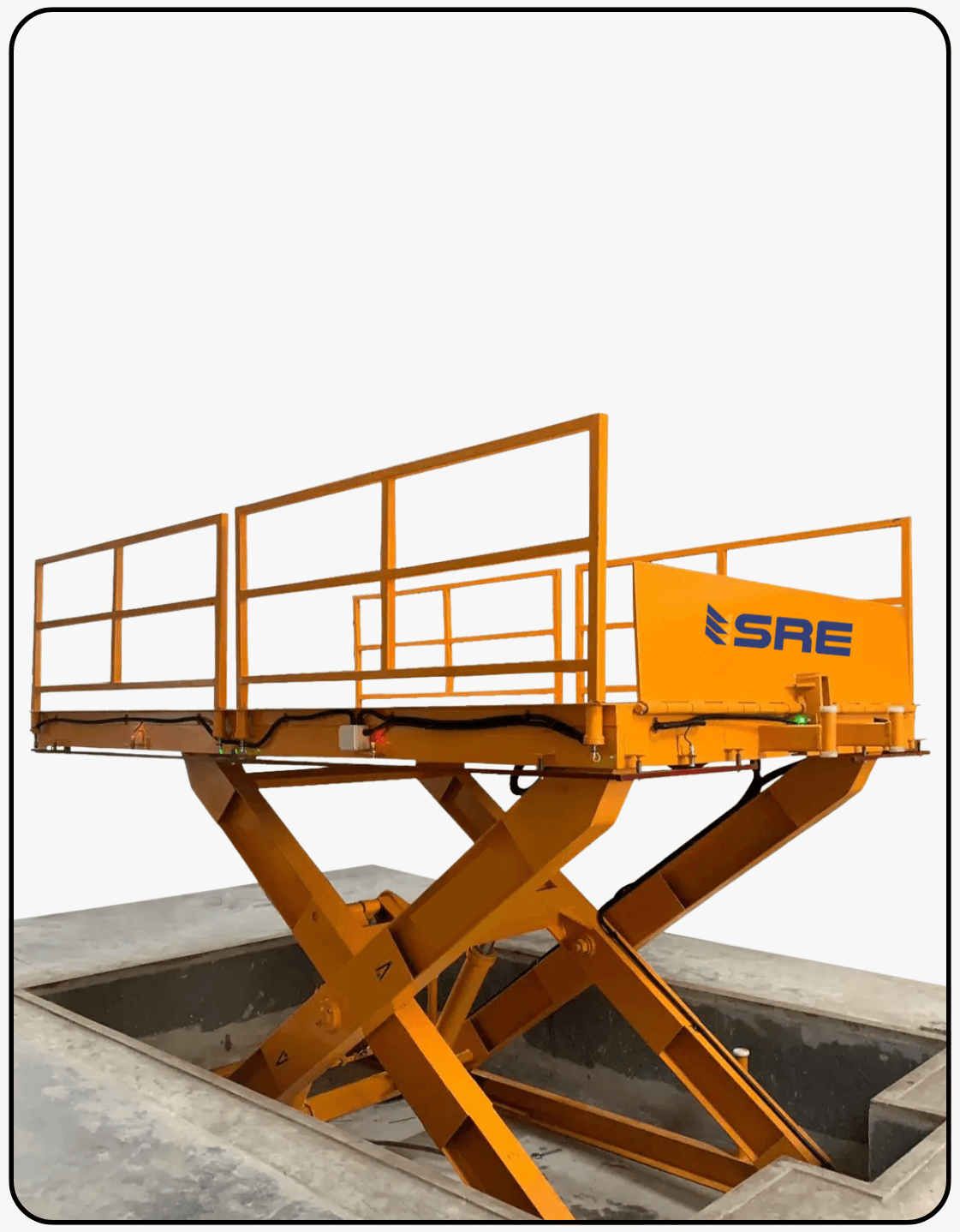
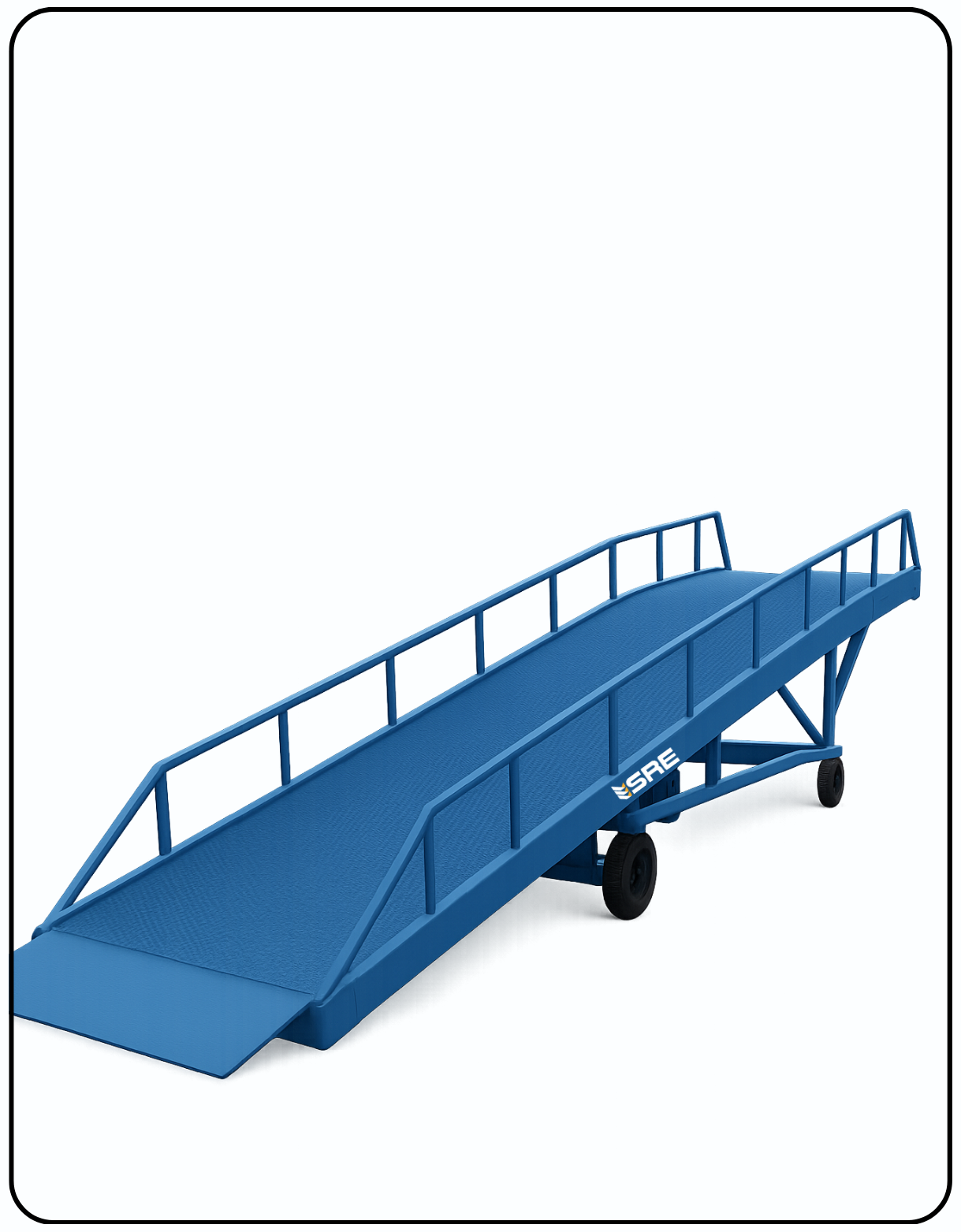
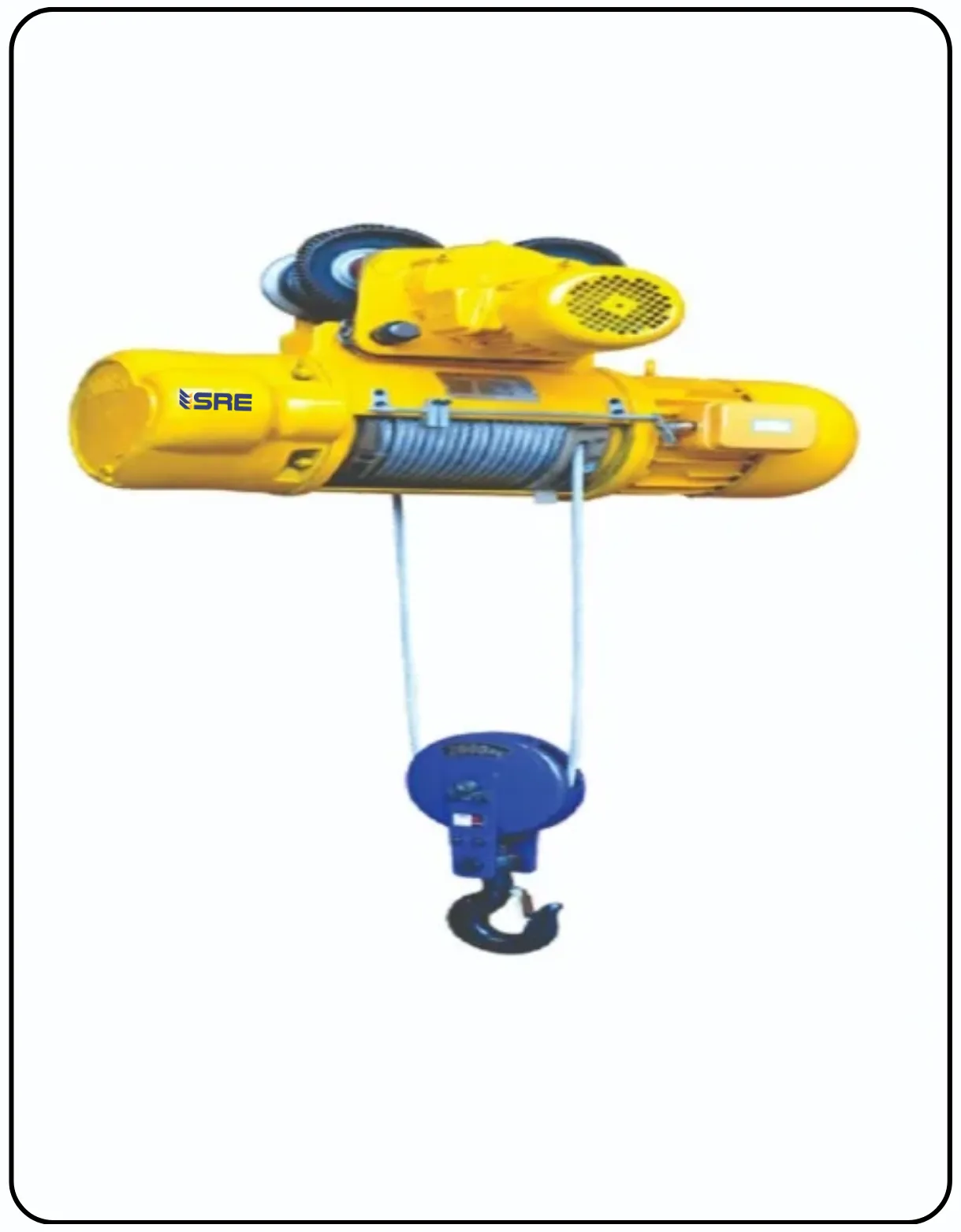
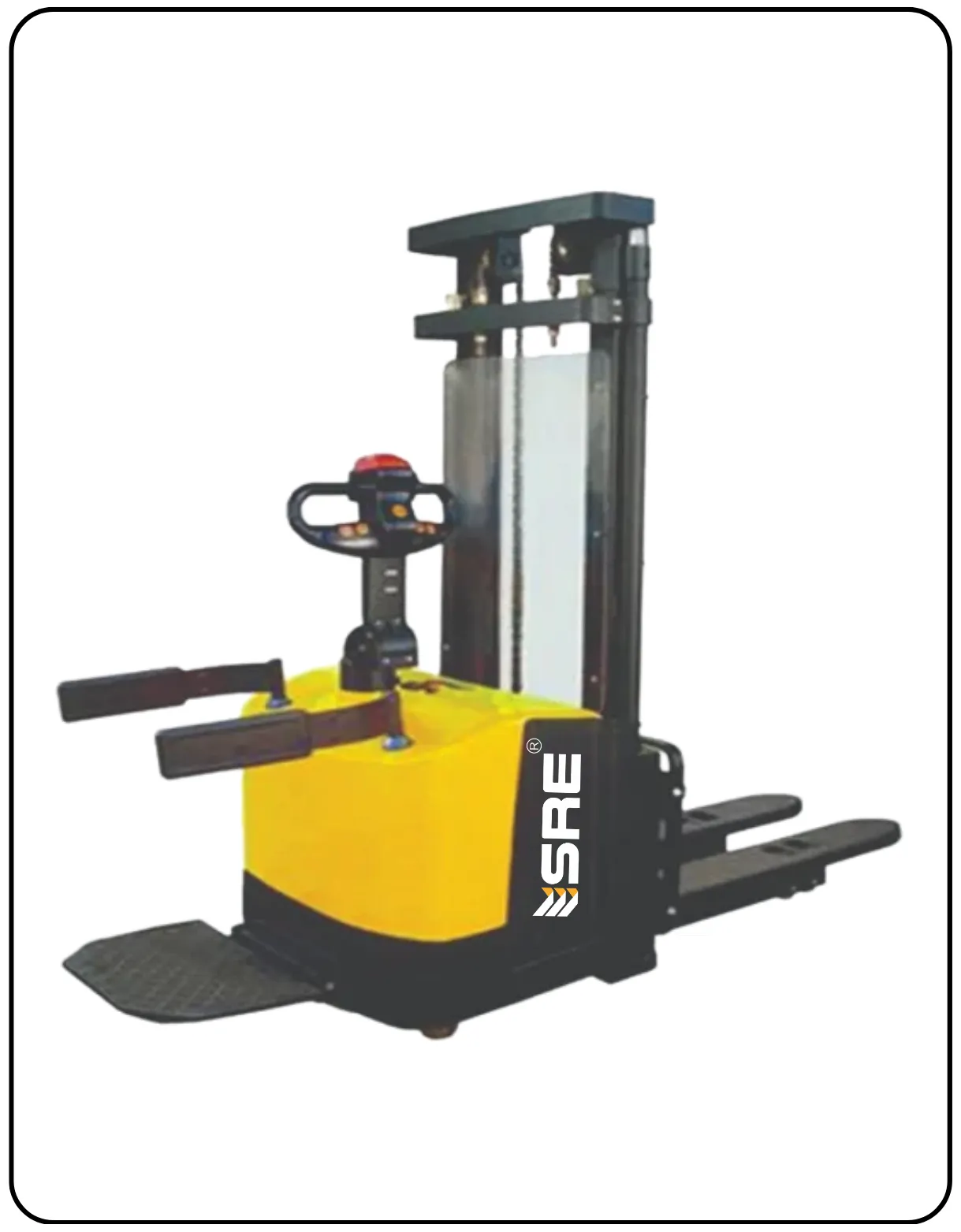
SRE Material Handling Equipment Pvt. Ltd. is a Manufacturer, Supplier, And Exporter of pit-mounted scissor Lift tables in India.
SRE Material Handling Equipment Pvt. Ltd., Manufacturer And Supplier Of Pit Mounted Scissor Lift Table in Vadodara.
Our Manufacturing Unit is in Ahmedabad, Vadodara, and Rajkot, Gujarat, India.
Pit-Mounted Scissor Lift Table in Vadodara: A Practical Remedy for Contemporary Industrial Workflows
In today’s manufacturing settings, how warehouses and factories operate has significantly evolved over the last decade. Greater output targets, stricter shipping deadlines, tighter safety regulations, and ongoing staffing difficulties have reshaped decisions around material handling. During daily warehouse tasks, supervisors constantly navigate speed, precision, and worker well-being—often constrained by limited floor area and mounting operational pressures.
This compilation of demands becomes especially clear when dealing with vertical material transport. Manual hoisting, improvised staging, and outdated machinery impede speed and heighten the risks of worker exhaustion. This is precisely where a Pit Mounted Scissor Lift Table naturally fits into modern industrial setups—not as an extra, but as a practical, process-focused solution that boosts uniformity, security, and effectiveness on the shop floor.
The Evolving Requirements of Today’s Warehouses and Industries
Facilities in Vadodara and across India are managing increased volumes with less buffer stock. Rapid order fulfillment cycles, just-in-time inventory practices, and lean production methods minimize waste.
Some frequent hurdles faced by operations teams include:
- Repeated manual lifting leading to operator fatigue
- Blockages at receiving, assembly, and packaging points
- Varying work elevations result in inconsistent output
- Heightened scrutiny to meet safety and regulatory benchmarks
In actual internal logistics, even minor time losses per cycle accumulate across shifts. Equipment that minimizes unproductive motion and stabilizes task sequences moves from optional to vital.
What Exactly Is a Pit-Mounted Scissor Lift Table?
A floor-level scissor lift platform is a stationary lifting surface installed perfectly level with the surrounding floor when retracted. Instead of resting above ground, it operates from a recessed pit, enabling materials to be moved vertically without impeding nearby movement corridors.
Simply put, it brings the conveyed item to the operator’s optimal working elevation, eliminating the need for personnel to stoop, reach, or manually reposition goods. Since it integrates directly into the floor surface, it becomes an active component of the process rather than an obstruction.
Why Floor-Level Scissor Lifts Are Superseding Older Manual Methods
Manual transportation techniques—such as building stacks, using inclines, or using temporary platforms—were once standard due to lower volumes and simpler operations. Today, these approaches struggle to maintain pace.
A Pit Mounted Scissor Lift Table replaces these methods by delivering:
- Reliable lifting elevation across all tasks
- Diminished physical stress on employees
- Regulated vertical motion for improved handling accuracy
Over time, sites relying on manual substitutes often experience greater fatigue, slower throughput, and a higher risk of accidents. Modern lifting tables resolve these issues in a predictable, repeatable manner.
Productivity Gains in Routine Tasks
Productivity enhancements don’t always stem from working quicker—they arise from working more intelligently. In environments where lift tables are incorporated into packing, assembly, or shipping zones, workflows proceed much more fluidly.
Functional advantages frequently include:
- Quicker loading and unloading loops
- Less time spent correcting pallet positioning or work heights
- More stable output across different shifts and teams
When personnel work at ergonomic levels, they sustain steady performance without unnecessary interruptions or strain-related slowing.
Upping Workplace Security
Workplace security is not merely about adherence to rules; it directly impacts operational uptime and workforce stability. Many common warehouse injuries result from habitual bending, excessive reaching, or loads that move uncontrollably.
Utilizing controlled lifting machinery helps mitigate:
- Strain on the lower back and shoulders
- Unintended load drops during manual transport
- Unsafe ad-hoc solutions using crates or temporary supports
A floor-recessed configuration also minimizes tripping risks as the platform sits entirely flush when inactive.
Managing Heavier Items with Ease
As pallet mass increases and packaging becomes more standardized, maintaining stable load handling becomes crucial. Manual methods are not engineered for consistent heavy lifting throughout extended shifts.
Lift tables provide:
- Stable surfaces for even load distribution
- Controlled elevation, even at higher weight capacities
- Reduced the likelihood of load shifting during vertical transit
This stability is particularly vital in assembly lines and dispatch areas, where precision is paramount.
Technology and Operational Effectiveness
The majority of current scissor lift tables use reliable hydraulic or electromechanical powertrains designed for industrial duty cycles. The core focus is on operational readiness and predictability, rather than complex features.
From an operational viewpoint, key merits involve:
- Silky, regulated ascent and descent
- Minimal variance in performance between shifts
- Dependable functioning under continuous duty
The emphasis remains on reliable execution rather than automation for its own sake.
Space Maximization and Accessibility
Floor space remains a highly valued asset in most facilities. Since floor-level lifts recess into the ground, they avoid blocking lanes or impeding forklift access when stowed.
This feature makes them optimal for:
- Congested-aisle warehouses
- Set workstations
- Zones with shared movement pathways for people and equipment
By integrating into the floor, they support better utilization of the area without hindering approachability.
Financial Prudence Over the Long Run
While the initial outlay requires consideration, seasoned procurement departments assess equipment based on its lifespan value. Over time, lift tables contribute to financial savings via:
- Decreased time lost due to injury incidents
- Lower incidence of fatigue-related absences
- More reliable workflow forecasting
These indirect returns frequently exceed the primary acquisition cost, especially in high-volume operations.
Green Initiatives and Regulatory Alignment
Contemporary industrial operations are increasingly prioritizing energy efficiency and regulatory compliance. Lift tables support these objectives by fostering safer, cleaner procedures.
Regarding compliance, they match up well with:
- Guidelines for ergonomic handling
- Workplace safety mandates
- Organized, clear work environments
Energy-saving power units further aid sustainability efforts without complicating daily tasks.
Fitting Seamlessly into Factory and Warehouse Processes
A significant reason floor-level lifts are widely accepted is their flexibility. They integrate smoothly within:
- Assembly sequences
- Packaging stations
- Loading bays
- Inspection and quality assurance zones
As they become woven into the physical movement pattern, they encourage standardization of the process rather than disrupting current systems.
Instruction, User-Friendliness, and Servicing
Simplicity of use is a significant asset. Most lift tables demand minimal instruction and are intuitive for operators familiar with baseline industrial hardware.
Maintenance demands are predictable and generally encompass:
- Regular scrutiny
- Fundamental hydraulic or mechanical review
- Scheduled upkeep visits
This straightforward nature lessens reliance on specialized technical staff and supports enduring reliability.
Why Selecting a Trustworthy Producer Is Crucial
The performance of a lift table heavily relies on design quality, components, and post-sale assistance. Opting for an experienced manufacturer guarantees:
- Adherence to safety benchmarks
- Consistent manufacturing standards
- Accessibility to support and replacement components
Firms such as SRE MATERIAL HANDLING EQUIPMENT PRIVATE LIMITED concentrate on practical, industry-relevant solutions supported by expertise gained in actual manufacturing settings. Further specifics on their material handling offerings can be viewed at: https://www.sremhepvtltd.com/
Summary
For warehouses and factories managing escalating volumes, tighter schedules, and evolving safety requirements, a Pit-Mounted Scissor Lift Table delivers tangible operational benefits. It enhances workflow consistency, promotes safer handling, and integrates cleanly into modern industrial layouts.
Rather than seeing it as isolated machinery, experienced operations leaders view it as a key element in a broader strategy for safety and output—one that supports personnel, processes, and long-term performance.
Essential Takeaways
- Productivity: Smooths out vertical transport and stabilizes task flows
- Safety: Lessens fatigue and handling-related harm
- Load Management: Facilitates heavier, stable loads with precise control
- Value: Offers enduring savings through reduced operational halts
- Industry Direction: Aligns with contemporary, norm-compliant operations
Trending F&Q
Q1. Where is a pit-mounted scissor lift table commonly used?
It is widely used in assembly lines, packing stations, loading docks, and inspection areas where a consistent working height is required.
Q2. Is it suitable for heavy industrial loads?
Yes, when selected with appropriate capacity and design, it is well-suited for handling heavier pallets and components.
Q3. Does installation require major layout changes?
Installation involves creating a pit, but once installed, it integrates seamlessly into existing workflows.
Q4. How does it improve worker safety?
By eliminating repetitive bending and uncontrolled lifting, it reduces fatigue-related injuries and improves ergonomic handling.
Q5. What should buyers consider before procurement?
Capacity requirements, duty cycle, safety compliance, service support, and manufacturer reliability are key factors.
Contact us today for reliable pit-mounted lifting solutions. Call +91 9316 208879 or sremhepvtltd2025@gmail.com for assistance now.
#PitMountedScissorLiftTable #MaterialHandlingSolutions #WarehouseEfficiency #IndustrialSafety #ErgonomicHandling #VadodaraIndustry #SREMaterialHandlingEquipmentPrivateLimited