
SRE Material Handling Equipment Pvt. Ltd.: Manufacturer, Supplier And Exporter Of Mobile Ramp in India.
SRE Material Handling Equipment Pvt. Ltd., Manufacturer And Supplier Of Mobile Ramp in Pune.
Our Manufacturing Unit is in Ahmedabad, Vadodara, and Rajkot, Gujarat, India.
Mobile Ramp in Pune: Enhancing Warehouse Efficiency and Safety
Introduction
In modern industrial and warehouse operations, speed, efficiency, and safety have become critical factors for success. Warehouses today are no longer simple storage spaces; they are complex hubs managing high volumes of goods, strict deadlines, and ever-evolving logistical challenges. In daily operations, the demands on labor, machinery, and time are immense. Manual handling and traditional loading techniques can slow down workflows, increase fatigue, and elevate the risk of accidents. In this context, a Mobile Ramp has emerged as a practical, versatile solution for industries looking to streamline loading and unloading processes.
The Changing Needs of Modern Warehouses
With e-commerce growth, just-in-time supply chains, and larger industrial output, warehouses face unprecedented operational pressure. Operations managers now handle multiple shipments per day, with deadlines that leave little room for inefficiency. Real-life workflows often involve coordinating forklifts, trucks, and storage systems across tight schedules. Internal logistics challenges include uneven load distribution, bottlenecks at loading docks, and repetitive lifting tasks that can lead to labor fatigue. In such environments, equipment that simplifies load movement while maintaining safety standards becomes essential.
What Is a Mobile Ramp?
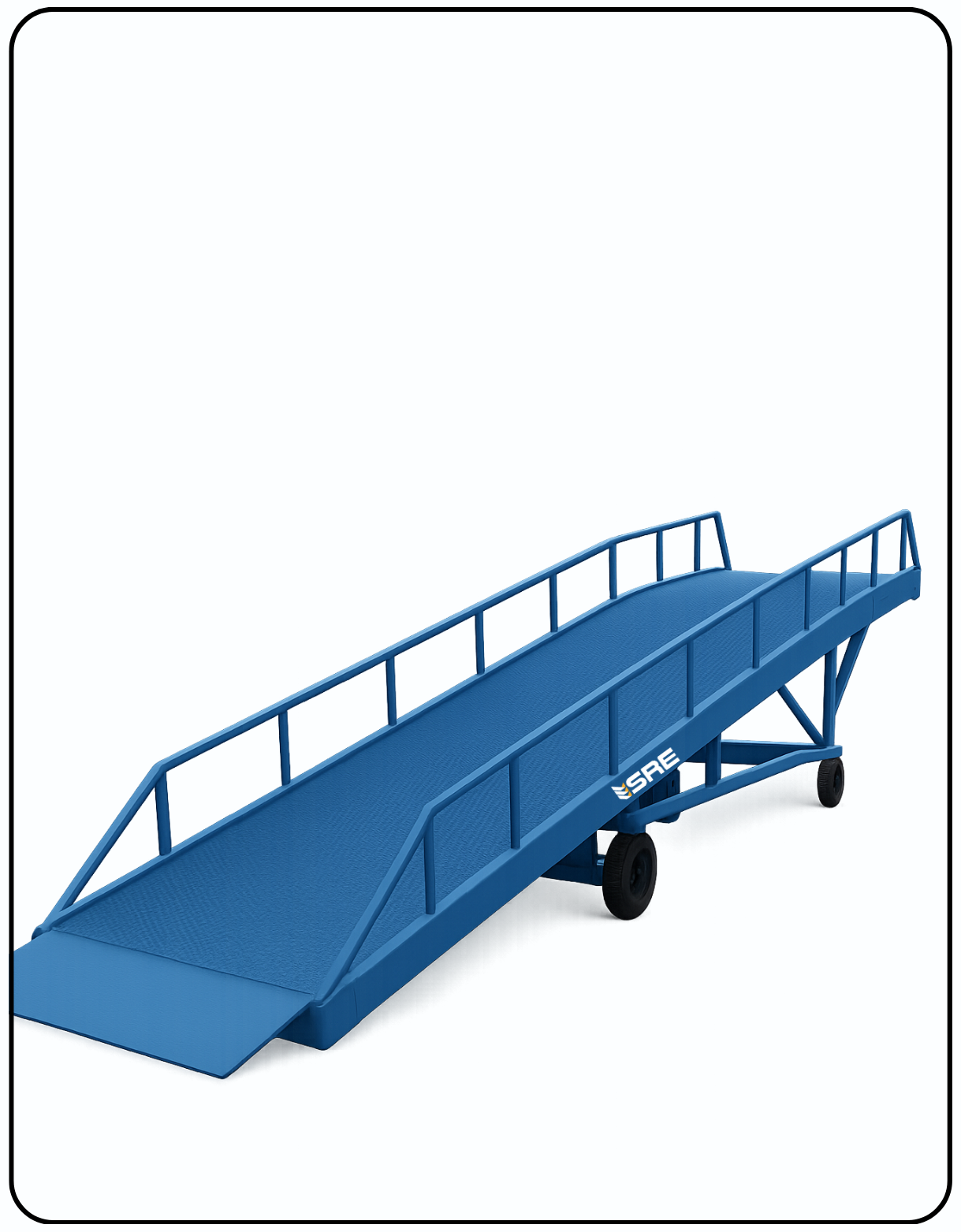
A Mobile Ramp is a portable, adjustable ramp designed to bridge the gap between a warehouse floor and transportation vehicles such as trucks or containers. Unlike fixed ramps, mobile ramps can be moved, positioned, and adjusted as per operational requirements. In industry terms, they serve as an intermediate surface allowing forklifts, pallet jacks, and other material handling equipment to move goods efficiently and safely. The design focuses on stability, load-bearing capacity, and ergonomic handling, ensuring it integrates seamlessly into daily warehouse operations.
Why Mobile Ramps Are Replacing Traditional Methods
Traditional manual methods of loading—such as lifting goods directly into trucks or using fixed ramps—can be labor-intensive and inconsistent. In daily operations, employees face fatigue, increased risk of injury, and reduced efficiency during peak hours. A mobile ramp reduces these risks by offering:
- Consistency: Every shift can operate with predictable movement and load transfer.
- Fatigue Reduction: Less manual lifting translates into healthier, more productive employees.
- Operational Efficiency: Streamlines the movement of goods, reducing bottlenecks and delays.
By comparison, fixed ramps or manual handling require constant repositioning and adjustment, which slows down workflow and increases operational stress.
Productivity Gains in Daily Operations
Implementing a mobile ramp in daily warehouse activities provides measurable time savings. In busy warehouses, forklifts can load and unload trucks without waiting for dock adjustments or makeshift solutions. The ramp allows for consistent throughput across multiple shifts, ensuring that operational targets are met without overburdening employees. For industries handling bulk goods, this translates into smoother scheduling and reduced downtime, directly impacting overall productivity.
Improved Workplace Safety
Safety is a primary concern in material handling. Mobile ramps enhance workplace safety by providing:
- Controlled Movement: The ramp’s design ensures forklifts and pallet jacks move securely between surfaces.
- Ergonomic Handling: Reduced manual lifting lowers the risk of back injuries and repetitive strain.
- Stability: Secure positioning prevents slips, trips, and accidental falls during loading operations.
In daily warehouse operations, the risk of injury often stems from rushed loading or uneven surfaces. A mobile ramp mitigates these risks, ensuring a safer working environment for all employees.
Handling Heavier Loads with Ease
Modern warehouses frequently deal with heavier goods, ranging from industrial machinery parts to bulk retail shipments. Mobile ramps are engineered to support substantial loads, offering stability and controlled handling. Forklifts and pallet jacks can move heavier items without strain, minimizing the risk of product damage and ensuring timely operations even during peak workloads.
Technology & Operational Efficiency
Mobile ramps incorporate practical technology and mechanical advantages to enhance efficiency. Depending on design, they may include:
- Adjustable heights for various truck sizes
- Hydraulic or mechanical lifts for smoother operation
- Battery-assisted movement systems in powered models
These features improve uptime, reliability, and adaptability to different operational scenarios, ensuring warehouse managers can maintain consistent throughput without interruption.
Space Optimization & Maneuverability
Warehouses often operate in confined spaces. Mobile ramps are designed for compactness and ease of maneuvering, making them suitable for narrow aisles and limited floor areas. Their portability allows managers to reposition ramps according to workflow demands, maximizing available space without permanent installations.
Cost Efficiency Over Time
While initial investment in mobile ramps may be higher than traditional methods, long-term benefits outweigh costs. By reducing labor strain, minimizing injuries, and improving workflow efficiency, warehouses save on medical claims, overtime, and productivity losses. Consistent operations across shifts also reduce downtime, contributing to cost-effective warehouse management.
Sustainability & Compliance
Many modern mobile ramps are designed with sustainability in mind. Efficient energy usage, long-lasting materials, and lower dependency on manual labor reduce the warehouse’s environmental footprint. Additionally, adopting safer handling practices aligns with occupational safety compliance standards, supporting a responsible and regulation-conscious operational approach.
Integration with Warehouse / Factory Workflow
Mobile ramps are versatile enough to integrate seamlessly into existing logistics systems. They complement forklifts, pallet jacks, conveyor systems, and other warehouse automation solutions. In daily operations, this means ramps can be deployed wherever needed without disrupting established workflows, ensuring smooth material movement from storage to transportation.
Training, Ease of Use & Maintenance
A key advantage of mobile ramps is their simplicity. Minimal training is required for operators to use ramps safely and efficiently. Predictable maintenance schedules, easy cleaning, and straightforward inspection procedures make them a practical addition to any industrial setup.
Why Choosing a Reliable Manufacturer Matters
Selecting a dependable manufacturer ensures quality, safety, and long-term support. Experienced manufacturers offer:
- Durable construction and certified load ratings
- Post-sales support and service expertise
- Compliance with local safety regulations
Choosing equipment from a reputable provider reduces operational risk and ensures that the investment in mobile ramps delivers practical benefits for years.
Conclusion
In modern warehouse and industrial operations, efficiency, safety, and adaptability are non-negotiable. A Mobile Ramp addresses these needs by streamlining load handling, reducing labor fatigue, and ensuring consistent workflow. For warehouses in Pune and across India, integrating mobile ramps into daily operations is a practical, future-proof solution that enhances productivity, safety, and operational reliability.
For more information about reliable mobile ramps, visit SRE MATERIAL HANDLING EQUIPMENT PRIVATE LIMITED.
Key Takeaways
- Productivity: Speeds up loading/unloading and ensures consistent output.
- Safety: Reduces injury risks and ergonomic strain.
- Load Handling: Supports heavier items with stability and control.
- Cost Efficiency: Long-term savings through reduced downtime and labor fatigue.
- Industry Trend: Mobile ramps are replacing manual and fixed loading methods for modern warehouse efficiency.
Trending FAQs
Q1: Can mobile ramps handle all truck sizes?
A: Most mobile ramps are adjustable to accommodate a variety of truck heights and container types.
Q2: Do mobile ramps require special training?
A: No, they are designed for simple operation with minimal training.
Q3: Are mobile ramps safe for heavy machinery loads?
A: Yes, they are engineered for stability and controlled handling of heavy industrial goods.
Q4: How do mobile ramps improve workflow efficiency?
A: By reducing manual handling, minimizing delays, and providing consistent loading conditions.
Q5: Can mobile ramps be integrated with other warehouse systems?
A: Absolutely, they work alongside forklifts, pallet jacks, and conveyor systems for seamless material movement.
Connect directly with SRE MATERIAL HANDLING EQUIPMENT PRIVATE LIMITED for solutions. Call +91 9316 208879 or email sremhepvtltd2025@gmail.com
#IndustrialEquipment #MaterialHandling #MobileRamp #WarehouseSafety #LoadHandling #Efficiency #SREMHEPVTltd #WarehouseManagement #LogisticsSolutions #PuneWarehouses #OperationalExcellence #ErgonomicEquipment #WarehouseAutomation