
SRE Material Handling Equipment Pvt. Ltd.: Manufacturer, Supplier And Exporter Of Electric Wire Rope Hoist in Gujarat.
SRE Material Handling Equipment Pvt. Ltd., Manufacturer And Supplier Of Electric Wire Rope Hoist in Ahmedabad.
Our Manufacturing Unit is in Ahmedabad, Vadodara, and Rajkot, Gujarat, India.
Electric Wire Rope Hoist in Ahmedabad: Practical Lifting for Modern Industrial Operations
In daily warehouse and factory operations across Ahmedabad, the pressure on material handling systems has increased steadily. Faster order cycles, heavier components, and tighter safety rules mean that traditional lifting methods often struggle to keep up.
This is not about chasing new technology for its own sake. It is about solving everyday issues—missed deadlines, worker fatigue, handling damage, and safety incidents. For many industrial decision-makers, the Electric Wire Rope Hoist is no longer optional; it is becoming a basic part of a reliable material handling setup.
Introduction: How Industrial Operations Have Changed
Ten or fifteen years ago, many warehouses and factories relied heavily on manual chain blocks, basic cranes, or even team lifting for heavier items. Volumes were lower, expectations were simpler, and timelines were more flexible.
Today, operations look very different:
- Order sizes are larger and more frequent
- Product variety is higher
- Turnaround time is shorter
- Safety regulations are stricter
At the same time, labour fatigue has become a serious concern. Repeated heavy lifting leads to injuries, absenteeism, and lower productivity.
In this environment, equipment must do more of the physical work. The Electric Wire Rope Hoist fits naturally into this shift, offering controlled lifting, consistent performance, and safer handling for daily operations.
The Changing Needs of Modern Warehouses and Industries
Industrial facilities in and around Ahmedabad now handle:
- Heavier raw materials
- Larger machinery parts
- Palletized goods at higher stacking heights
- Faster loading and unloading cycles
Operations managers often describe similar challenges:
- Congestion at loading bays
- Delays due to slow manual lifting
- Workers are getting tired halfway through long shifts
- Inconsistent handling quality between shifts
Internal logistics is no longer a side activity—it directly affects delivery time, customer satisfaction, and cost control. Equipment that cannot keep up becomes a bottleneck.
This is why many facilities are reviewing their lifting and shifting systems, not just forklifts and conveyors, but also overhead and workstation-level lifting solutions.
What Is an Electric Wire Rope Hoist?
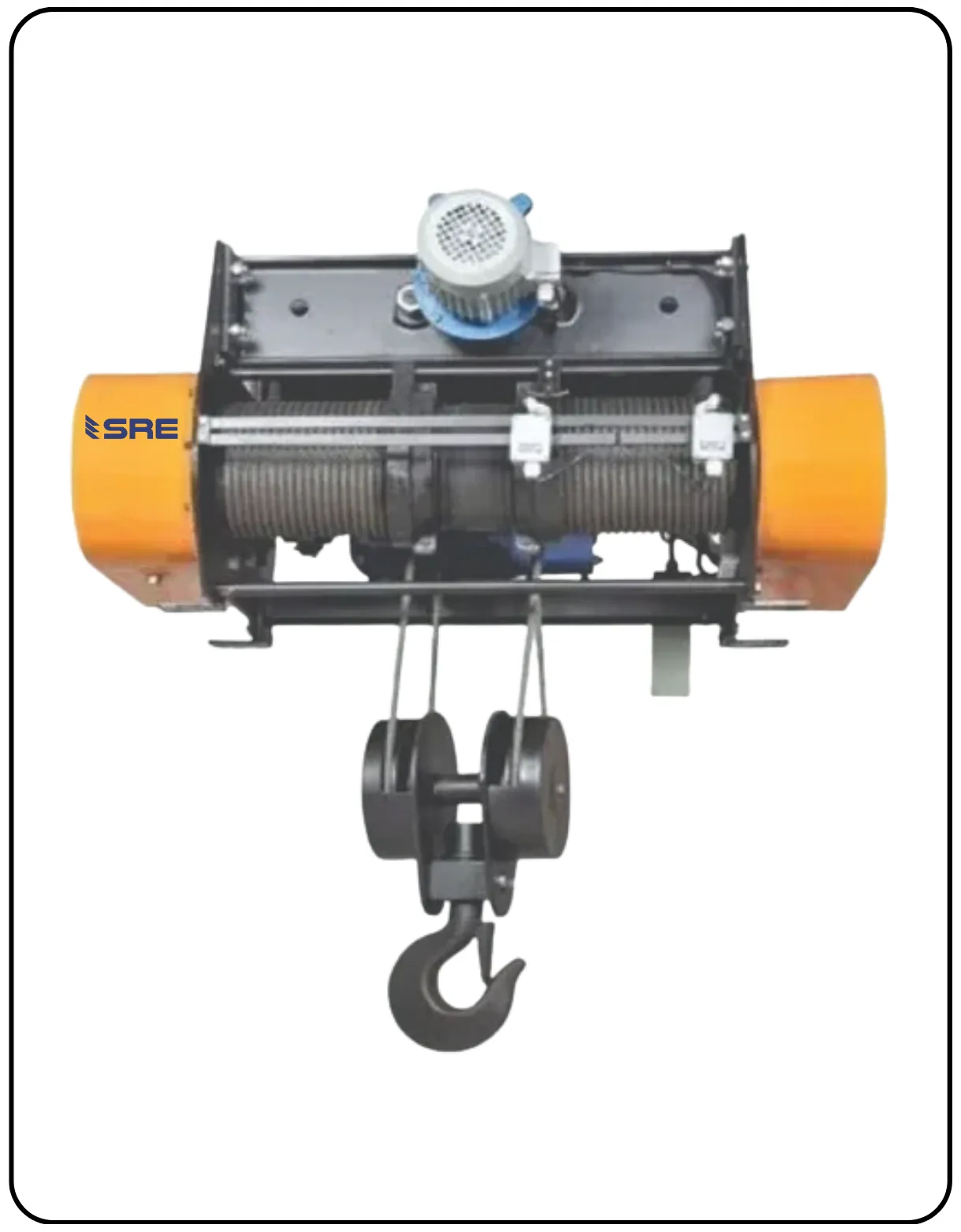
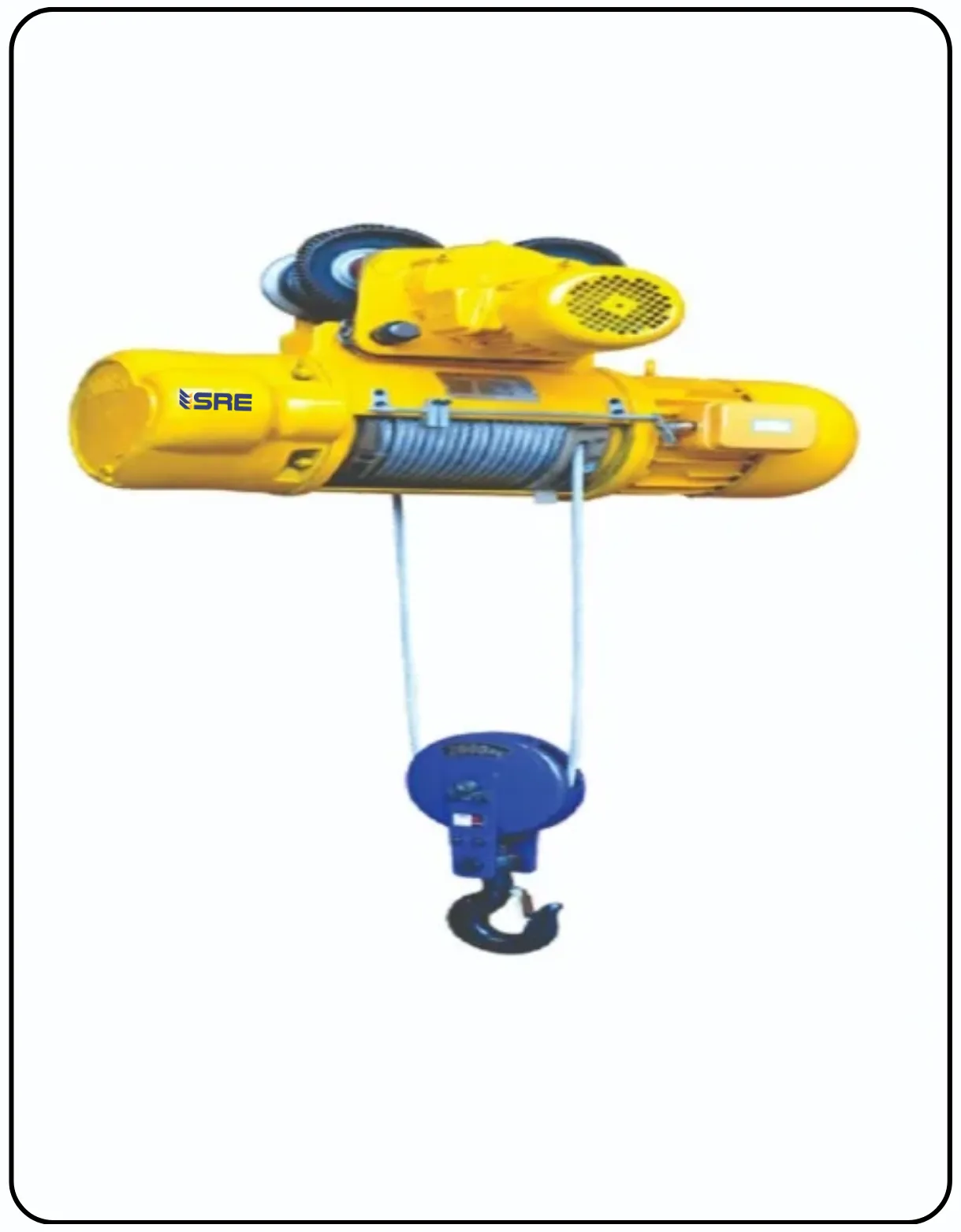
An Electric Wire Rope Hoist is a motor-driven lifting device that uses a steel wire rope wound around a drum to lift and lower loads. It is usually mounted on a crane, gantry, or beam.
In simple operational terms:
- You press a control
- The motor turns
- The wire rope winds or unwinds
- The load moves smoothly up or down
Unlike manual chain blocks, there is no need for physical pulling. Unlike makeshift lifting arrangements, movement is controlled and predictable.
It is commonly used for:
- Machine installation and maintenance
- Loading and unloading heavy items
- Moving dies, moulds, or large components
- Handling bulky materials within a work area
The key value is not complexity, but reliability in daily use.
Why Electric Wire Rope Hoist Is Replacing Traditional or Manual Equipment
Manual lifting tools still exist, but their limits are clear in modern operations.
Manual or semi-manual systems often cause:
- Slower cycle times
- Inconsistent lifting speed
- Higher physical strain on workers
- Greater chance of human error
An Electric Wire Rope Hoist changes this pattern.
Instead of depending on human strength, it depends on controlled mechanical power. This brings three major operational benefits:
- fatigue reduction.: Workers no longer need to pull heavy chains repeatedly. They can focus on guiding the load safely instead of struggling to lift it.
- consistency.: Every lift happens at the same speed and with the same control, regardless of who is operating it or which shift it is.
- efficiency.: Tasks that took several minutes manually can often be completed in seconds with powered lifting.
This is why many factories now reserve manual equipment only for light or occasional tasks, and rely on powered hoists for regular operations.
Productivity Gains in Daily Operations
In daily warehouse operations, short-term savings add up.
If a single lift takes two minutes manually but 30 seconds with an electric hoist, and that lift is repeated 100 times a day, the difference is significant.
Operations managers often notice:
- Faster loading and unloading
- Reduced waiting time for materials
- Smoother workflow between departments
Another important factor is shift consistency. With manual methods, output often drops in later hours as workers get tired. With powered lifting, performance stays steady across the shift.
This makes planning easier. When output is predictable, scheduling, staffing, and delivery planning become more reliable.
Improved Workplace Safety
Safety is not just about following rules. It is about reducing situations where injuries are likely to happen.
Manual lifting increases the risk of:
- Back and shoulder injuries
- Slips during heavy pulling
- Sudden load drops due to loss of grip
An electric hoist reduces these risks by:
- Taking physical strain away from the worker
- Allowing controlled, steady movement
- Enabling the operator to keep a safe distance
Because movement is smoother, loads are less likely to swing suddenly or shift unexpectedly.
In many facilities, injury reports related to lifting tasks reduce noticeably after switching to powered hoists.
Handling Heavier Loads with Ease
Modern warehouses and factories handle heavier items than before. Machinery parts, large moulds, steel components, and packed pallets all require reliable lifting.
Trying to manage these with manual tools creates two problems:
- It limits the maximum safe load
- It increases the chance of accidents
Electric hoists are designed for heavy-duty work. Their structure, wire rope, drum, and motor are built to handle high loads with stability.
The benefit is not only capacity, but control. Even heavy loads can be lifted slowly, positioned accurately, and lowered gently, which reduces damage to both products and equipment.
Technology and Operational Efficiency
Most modern electric wire rope hoists use reliable electric motors with strong gear systems.
From an operational point of view, this means:
- Stable performance across long working hours
- Less variation in lifting speed
- Fewer interruptions due to manual fatigue
Power systems are designed for industrial use, meaning they can handle repeated cycles without overheating or losing efficiency.
For managers, the main advantage is uptime. When lifting equipment works reliably, overall operations face fewer delays.
Space Optimization and Maneuverability
Many older factories in Ahmedabad were not built for today’s volumes. Space is often tight, aisles are narrow, and ceiling height is limited.
Electric wire rope hoists are usually compact and can be mounted overhead.
This brings two advantages:
- Floor space remains free for movement
- Loads can be handled in narrow or crowded areas
Because lifting happens vertically and can move along beams or cranes, it becomes easier to handle materials even in tight layouts.
This is especially useful in:
- Assembly shops
- Tool rooms
- Maintenance bays
- Old industrial buildings with limited space
Cost Efficiency Over Time
Electric hoists are not the cheapest option at the time of purchase. But looking only at the initial price can be misleading.
Over time, they help reduce:
- Labour strain and injury-related costs
- Downtime due to manual delays
- Damage caused by unstable handling
They also help improve productivity, which indirectly reduces the cost per unit handled.
For many companies, the real value shows after months of daily use, when operations run more smoothly, and fewer problems appear in material handling.
Sustainability and Compliance
Sustainability is now part of industrial thinking, even in heavy manufacturing.
Electric lifting systems support this by:
- Reducing reliance on human overexertion
- Using controlled electrical power instead of inefficient manual systems
- Supporting safer and cleaner operations
Compliance with safety standards is also easier when controlled lifting equipment is used. Inspections, audits, and internal safety checks become simpler when proper lifting systems are in place.
Integration with Warehouse and Factory Workflow
An electric wire rope hoist is not used in isolation. It becomes part of the overall workflow.
It often works with:
- Overhead cranes
- Gantry systems
- Workstation frames
- Loading bay structures
In real operations, this means:
- Raw material can move directly from the truck to the storage
- Components can move from storage to assembly smoothly
- Finished goods can be loaded without double-handling
When lifting equipment fits into the workflow, movement becomes a natural part of production rather than a separate task.
Training, Ease of Use, and Maintenance
One concern managers often have is training. The good news is that most electric hoists are simple to operate.
Operators usually learn:
- Basic controls
- Safety rules
- Load positioning
within a short training period.
Maintenance is also predictable:
- Regular inspection of the wire rope
- Checking brakes and controls
- Simple lubrication and cleaning
Because the design is mechanical and electrical, not digital-heavy, maintenance does not require highly specialized skills.
Why Does Choosing a Reliable Manufacturer Matter?
Not all lifting equipment is the same.
Quality matters in:
- Steel structure
- Motor and gearbox
- Brake system
- Wire rope quality
- Safety mechanisms
A reliable manufacturer usually offers:
- Proper testing before delivery
- Clear load ratings
- Service support
- Spare parts availability
- Compliance with standards
For industrial buyers, this is more important than marketing claims. Equipment must work every day, not just look good on paper.
Companies such as SRE MATERIAL HANDLING EQUIPMENT PRIVATE LIMITED are known in the industry for focusing on practical lifting solutions rather than flashy features. Their experience with real industrial requirements helps in designing equipment that fits actual working conditions, especially in regions like Ahmedabad, where factories vary widely in layout and age.
Conclusion
Industrial operations are no longer slow, simple, or forgiving. Speed, safety, and consistency now define successful warehouses and factories.
The Electric Wire Rope Hoist is not a luxury tool. It is a response to real challenges:
- Rising workload
- Worker fatigue
- Safety risks
- Space limitations
By offering controlled lifting, stable performance, and safer handling, it supports both productivity and worker well-being.
For decision-makers, the question is no longer “Do we need powered lifting?” but rather “How long can we continue without it?”
If your operations in Ahmedabad are growing, becoming faster, or handling heavier loads, reviewing your lifting system is a practical first step toward smoother daily operations.
For more information on material handling solutions, you can also explore SRE MATERIAL HANDLING EQUIPMENT PRIVATE LIMITED at: https://www.sremhepvtltd.com/
Key Takeaways
- Productivity: Faster and more consistent lifting improves daily output
- Safety: Reduced strain and controlled movement lowers injury risk
- Load Handling: Heavy and bulky items become easier to manage
- Cost Efficiency: Long-term savings through reduced downtime and injuries
- Industry Trend: Powered lifting is becoming standard in modern facilities
Trending F&Q (Frequently Asked Questions)
- Is an electric wire rope hoist suitable for small factories?
Yes. Even small factories benefit from reduced fatigue, safer handling, and better workflow.
- How much maintenance does it require?
Basic periodic checks, wire rope inspection, and lubrication. It is not high-maintenance.
- Can it work in old industrial buildings?
Yes. Many hoists are compact and can be fitted to existing beams or simple structures.
- Is training complicated?
No. Operators usually learn basic use in a short time.
- Does it reduce manpower needs?
It does not replace workers but allows them to work more safely and efficiently.
If you are looking for reliable material handling and lifting solutions. Call +91 9316 208879 or email sremhepvtltd2025@gmail.com