
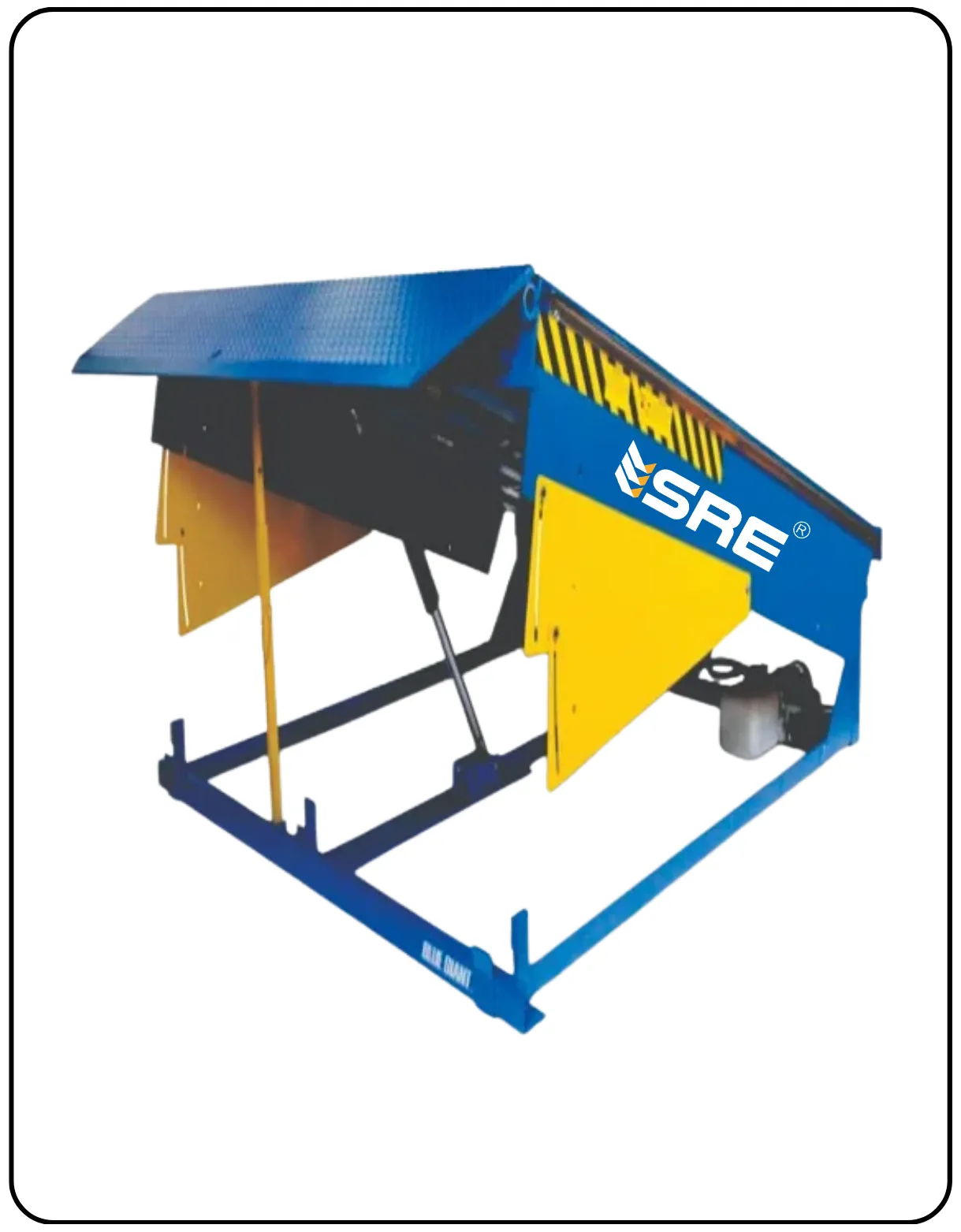
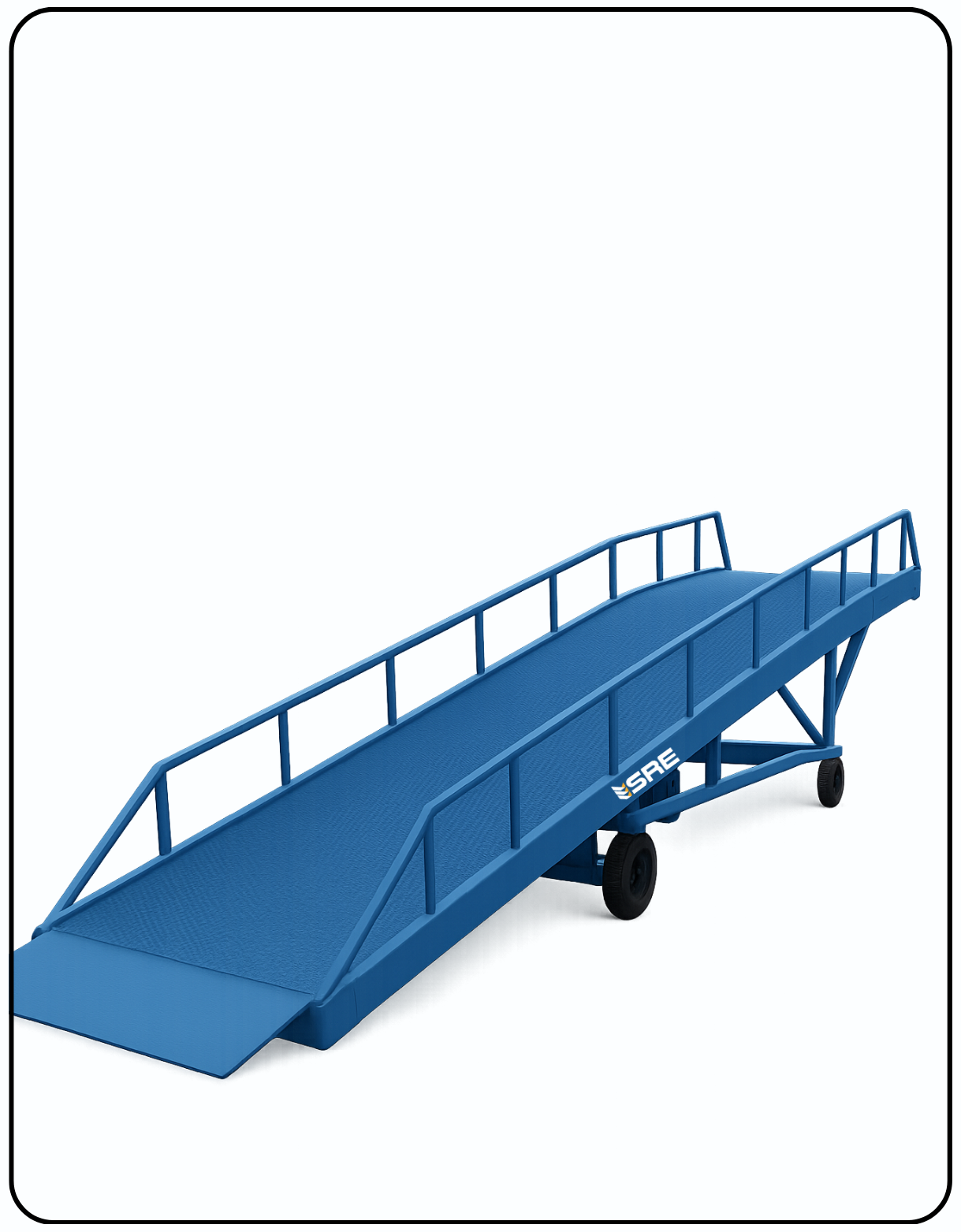
SRE Material Handling Equipment Pvt. Ltd.: Manufacturer, Supplier And Exporter Of Dock Leveler in India.
SRE Material Handling Equipment Pvt. Ltd., Manufacturer And Supplier Of Dock Leveler in Pune.
Our Manufacturing Unit is in Ahmedabad, Vadodara, and Rajkot, Gujarat, India.
Dock Leveler in Pune: A Practical Guide for Modern Warehouses and Industrial Facilities
In daily warehouse and factory operations, loading and unloading no longer happen at a relaxed pace. Faster dispatch cycles, higher shipment volumes, stricter safety expectations, and growing pressure on labor have changed how industrial facilities operate. What once worked with manual ramps, wooden planks, or improvised solutions now creates bottlenecks, fatigue, and avoidable risks.
Across Pune’s industrial belts—from manufacturing hubs to large distribution centers—operations teams are rethinking how goods move between trucks and warehouse floors. A Dock Leveler has quietly become one of the most practical upgrades in this transition. Not because it is new technology, but because it directly addresses real, everyday challenges faced on the loading dock.
This article looks at the Dock Leveler from an operational perspective: how it fits into modern workflows, what problems it solves, and why it has become standard equipment in efficient facilities.
The Changing Needs of Modern Warehouses and Industries
Warehouses today are under constant operational pressure. Order sizes vary, vehicle types change throughout the day, and turnaround times keep shrinking. In Pune, many facilities handle a mix of local distribution vehicles, long-haul trucks, and containerized transport—all with different bed heights.
Some common challenges operations heads mention include:
- Delays caused by mismatched truck and dock heights
- Increased physical strain on workers during manual adjustments
- Inconsistent loading speed between shifts
- Higher safety risks during peak dispatch hours
Internal logistics is no longer just about moving goods—it’s about doing it consistently, safely, and without exhausting people or equipment.
What Is a Dock Leveler?
In simple industry terms, a Dock Leveler is a bridge between the warehouse floor and the truck bed. It compensates for height differences so forklifts, pallet trucks, and trolleys can move smoothly across the gap.
Instead of relying on temporary ramps or manual lifting, a Dock Leveler creates a stable, level path that adjusts to different vehicle heights. In real operations, this means fewer interruptions, smoother movement, and less guesswork at the dock.
Why Dock Leveler Is Replacing Traditional Manual Equipment
Traditional loading methods were designed for slower operations. Wooden planks, fixed ramps, or manual steel plates often require adjustment every time a new vehicle arrives.
Over time, teams notice clear drawbacks:
- Workers bending, lifting, and repositioning heavy ramps
- Increased fatigue during long shifts
- Inconsistent alignment leading to jolts and product damage
- Higher dependency on skilled labor to “manage” the dock
A Dock Leveler reduces these variables. Once installed, it delivers repeatable performance shift after shift. Operators focus on moving goods, not managing equipment.
Productivity Gains in Daily Operations
In practical terms, productivity gains come from small, repeated efficiencies. A few minutes saved per truck quickly adds up over a full day.
Facilities using Dock Levelers often report:
- Faster vehicle turnaround times
- Reduced waiting between truck arrival and loading start
- Smoother forklift movement without frequent stops
- Consistent output regardless of operator experience
In multi-shift operations, this consistency is especially valuable. The dock performs the same way at 2 PM and 2 AM.
Improved Workplace Safety
Loading docks are among the highest-risk areas in any warehouse. Height differences, moving vehicles, and heavy loads create conditions where small errors can lead to serious injuries.
A Dock Leveler improves safety by:
- Eliminating sudden drops or gaps between dock and truck
- Providing controlled, stable movement for material handling equipment
- Reducing manual handling and awkward postures
- Supporting predictable, repeatable workflows
From a safety officer’s perspective, this translates into fewer incidents and easier compliance with internal safety protocols.
Handling Heavier Loads with Ease
As pallet weights increase and bulk shipments become common, load stability matters more than ever. Manual ramps are often not designed for modern load patterns or continuous forklift traffic.
Dock Levelers are engineered for:
- High load capacities
- Even weight distribution
- Stable contact between dock and vehicle
This stability allows operators to handle heavier pallets confidently, without hesitation or risk of equipment shift.
Technology and Operational Efficiency
Modern Dock Levelers may use hydraulic, mechanical, or electro-mechanical systems depending on application needs. The focus is not complexity, but reliability.
Key operational advantages include:
- Quick response during dock height changes
- Reliable performance across multiple vehicle types
- Minimal downtime with proper maintenance
- Predictable operation even during peak hours
For operations managers, dependable uptime is more valuable than advanced features that complicate daily use.
Space Optimization and Maneuverability
Warehouse space is expensive, especially in industrial zones around Pune. Equipment that requires extra clearance or complex positioning reduces usable floor area.
Dock Levelers are designed to:
- Integrate directly into existing dock structures
- Support narrow-aisle forklift operations
- Keep dock areas uncluttered
By eliminating loose ramps and temporary solutions, the dock area remains organized and safer to navigate.
Cost Efficiency Over Time
While a Dock Leveler is a capital investment, its value becomes clear over time. The real cost of manual methods often hides in indirect losses.
Long-term efficiencies include:
- Lower injury-related expenses
- Reduced product damage
- Less labor fatigue and turnover
- Fewer operational delays
From a procurement perspective, this is about total cost of ownership—not just initial price.
Sustainability and Compliance
Many industrial facilities are adopting cleaner, more structured operations to meet internal sustainability goals and external compliance requirements.
Dock Levelers support this mindset by:
- Reducing unnecessary energy use during loading
- Supporting orderly, controlled workflows
- Aligning with safety and material handling standards
- Well-designed dock equipment reflects a facility’s commitment to responsible operations.
Integration with Warehouse and Factory Workflows
A Dock Leveler does not operate in isolation. It must align with forklifts, pallet trucks, racking systems, and transport schedules.
In practice, Dock Levelers integrate smoothly into:
- Inbound and outbound logistics planning
- Cross-docking operations
- High-frequency dispatch environments
- Manufacturing supply chains
When dock operations flow smoothly, the rest of the facility benefits.
Training, Ease of Use, and Maintenance
One of the strengths of a Dock Leveler is its simplicity. Operators typically require minimal training to use it safely and effectively.
Operational advantages include:
- Intuitive controls
- Standardized operating procedures
- Predictable maintenance schedules
- Easy inspection and servicing
This reduces dependency on specialized labor and simplifies daily management.
Why Choosing a Reliable Manufacturer Matters
Not all Dock Levelers perform the same over years of use. Build quality, engineering standards, and after-sales support make a real difference.
When evaluating manufacturers, decision-makers should look for:
- Proven experience in industrial material handling
- Compliance with safety and performance standards
- Availability of service and spare parts
- Clear documentation and technical support
Companies like SRE MATERIAL HANDLING EQUIPMENT PRIVATE LIMITED focus on delivering equipment that fits real operational environments rather than theoretical use cases. More information about their material handling solutions can be found at their official website: https://www.sremhepvtltd.com/
Conclusion
In modern warehouses and factories, the loading dock is no longer just a transfer point—it is a productivity and safety checkpoint. A Dock Leveler addresses everyday operational challenges by creating consistency, reducing physical strain, and improving workflow reliability.
For facilities in and around Pune, investing in the right dock equipment is less about modernization and more about operational stability. When chosen carefully and integrated properly, a Dock Leveler becomes a quiet but critical contributor to long-term efficiency.
If you are reviewing dock operations or planning a facility upgrade, evaluating how a Dock Leveler fits into your workflow is a practical place to start.
Key Takeaways
- Productivity: Faster, more consistent loading and unloading cycles
- Safety: Reduced risk at one of the most hazardous warehouse zones
- Load Handling: Stable movement for heavier and varied cargo
- Cost Efficiency: Lower long-term operational and injury-related costs
- Industry Trend: A standard solution in modern, high-volume facilities
Trending FAQs (F&Q)
Q1. Is a Dock Leveler suitable for small warehouses?
Yes. Even facilities with moderate vehicle movement benefit from improved safety and consistency.
Q2. Can one Dock Leveler handle different truck heights?
Modern Dock Levelers are designed to accommodate a wide range of vehicle bed heights.
Q3. How much maintenance does a Dock Leveler require?
Routine inspection and basic servicing are usually sufficient to ensure reliable operation.
Q4. Does installing a Dock Leveler disrupt ongoing operations?
With proper planning, installation can be completed with minimal disruption.
Q5. Is operator training complex?
No. Most Dock Levelers are simple to operate and require only basic training.
Contact us today for expert support and reliable industrial solutions. Call +91 9316 208879 or sremhepvtltd2025@gmail.com for assistance now.
#DockLeveler #DockLevelerInPune #MaterialHandlingSolutions #WarehouseEfficiency #IndustrialSafety #LoadingDockSolutions #SupplyChainOperations #FactoryLogistics #SREMaterialHandling #WarehouseInfrastructure #MakeInIndia #IndustrialEquipment