
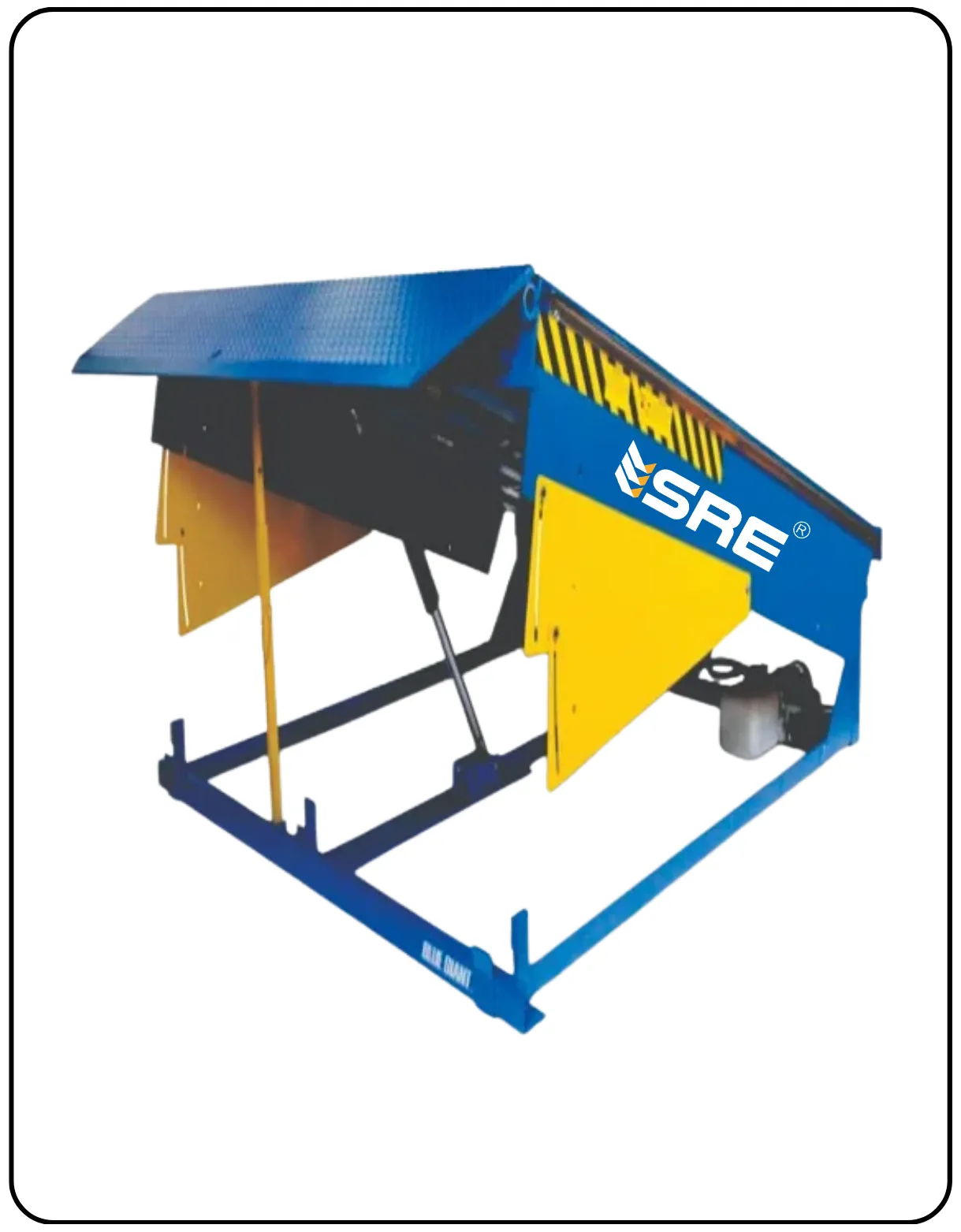
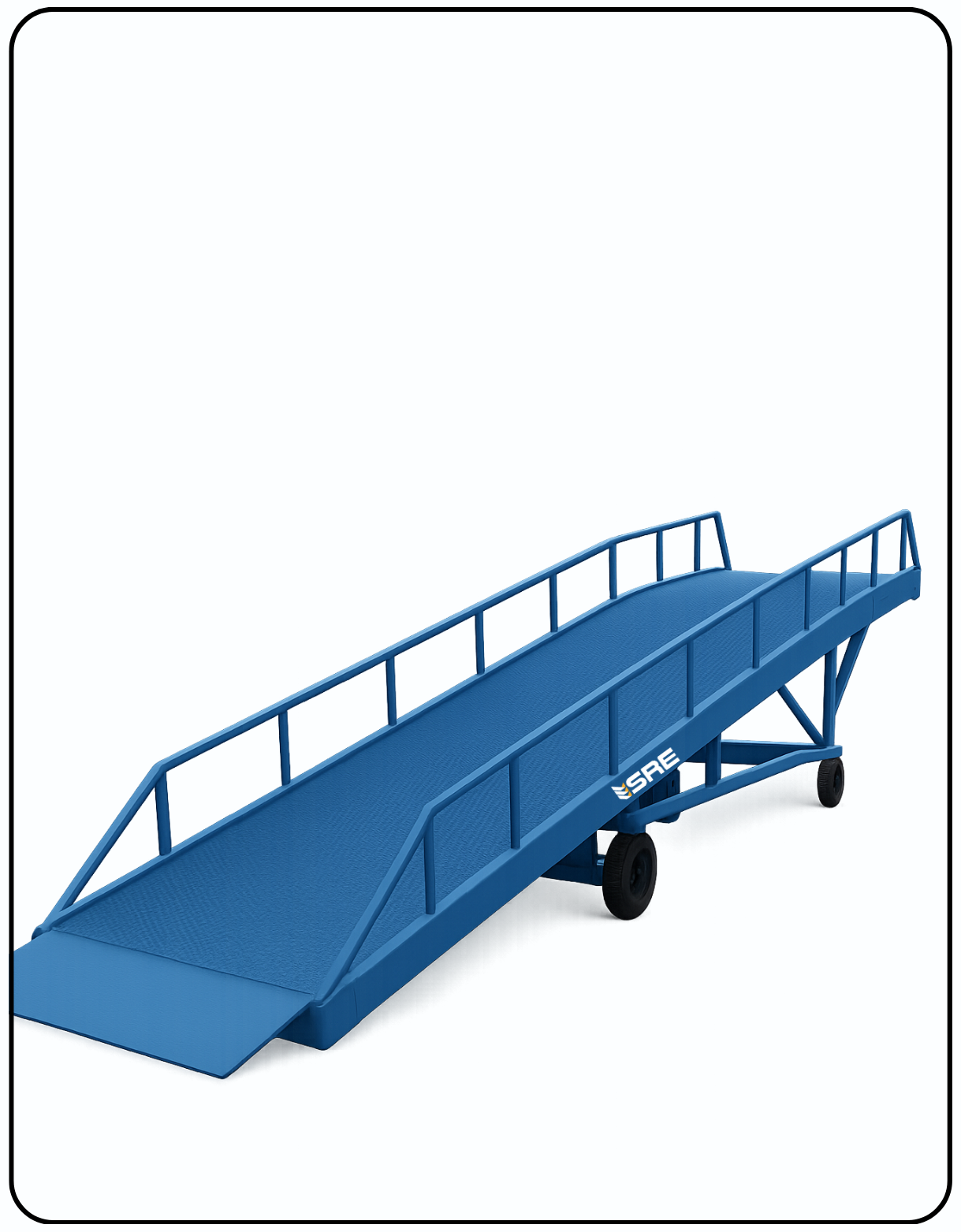
SRE Material Handling Equipment Pvt. Ltd.: Manufacturer, Supplier And Exporter Of Ware House Dock Leveler in Pune.
SRE Material Handling Equipment Pvt. Ltd., Manufacturer And Supplier Of Ware House Dock Leveler in Pune.
Our Manufacturing Unit is in Ahmedabad, Vadodara, and Rajkot, Gujarat, India.
Ware House Dock Leveler in Pune: A Practical Solution for Modern Loading Challenges
In daily warehouse and factory operations, loading and unloading is no longer a simple support activity. It has become a critical link that directly affects turnaround time, labor efficiency, and workplace safety. As warehouses in and around Pune handle higher shipment volumes, tighter delivery schedules, and a wider range of vehicle types, traditional loading methods are increasingly showing their limits.
This is where a Ware House Dock Leveler becomes a practical and necessary solution. Rather than being a “new upgrade,” it is a response to real operational pain points—uneven truck heights, manual handling risks, loading delays, and worker fatigue. For industrial facilities looking to stabilize performance and reduce daily friction at the dock, dock levelers are becoming a standard part of modern infrastructure.
The Changing Needs of Modern Warehouses and Industries
Warehousing operations in Pune have evolved rapidly over the last decade. Distribution centers now handle mixed SKUs, frequent dispatch cycles, and higher inbound material flow from vendors and manufacturers.
Some common challenges seen on shop floors include:
- Frequent truck movement with varying bed heights
- Pressure to load and unload faster without increasing manpower
- Increased safety audits and compliance requirements
- Fatigue among dock workers due to repetitive manual adjustments
In real-life workflows, even a few minutes lost per truck can compound into hours of delay across shifts. Manual solutions may work in low-volume environments, but they struggle to keep pace with today’s operational demands.
What Is a Ware House Dock Leveler?
A Ware House Dock Leveler is a mechanical or hydraulic platform installed at the loading dock that bridges the height gap between the warehouse floor and the truck bed.
In simple operational terms, it allows forklifts, pallet trucks, and material handling equipment to move smoothly in and out of vehicles without sudden height changes. Instead of adjusting labor or improvising with wooden blocks and ramps, the dock leveler provides a stable, controlled transition point.
It is not about automation for its own sake—it is about consistency and safety during one of the most active points in a warehouse.
Why Ware House Dock Leveler Is Replacing Traditional Manual Equipment
Traditional loading often relies on temporary ramps, manual lifting, or uneven docking practices. These methods introduce variability into every loading cycle.
From an operational perspective, dock levelers reduce:
- Manual lifting and pushing effort
- Time spent aligning vehicles and floor levels
- Risk of slips, sudden drops, or load imbalance
Modern warehouses prefer predictable processes. A dock leveler ensures that every truck—regardless of size—can be handled with the same workflow, reducing dependence on individual worker strength or experience.
Productivity Gains in Daily Operations
In practical warehouse settings, productivity improvements are seen not through speed alone, but through smoother flow.
With a dock leveler:
- Forklifts enter and exit trucks without stopping or repositioning
- Loading cycles become more uniform across shifts
- Less time is spent waiting for manual adjustments
Over a full day of operations, this consistency translates into measurable time savings and fewer bottlenecks at the dock. Importantly, output becomes more predictable, which helps planning and coordination between teams.
Improved Workplace Safety
Dock areas are among the highest-risk zones in a warehouse. Height differences, moving vehicles, and heavy loads create constant exposure to injury.
A well-installed dock leveler helps:
- Reduce sudden height transitions that cause tipping
- Provide stable support for wheeled equipment
- Minimize strain from manual lifting and pushing
From a safety management perspective, controlled movement is always safer than reactive handling. Many facilities notice a reduction in minor injuries and near-miss incidents after standardizing dock operations.
Handling Heavier Loads with Ease
Modern warehouses in Pune increasingly deal with heavier pallets, bulk materials, and mechanized handling equipment.
Manual solutions struggle under these conditions. Dock levelers are designed to:
- Maintain load stability during transfer
- Support continuous movement of forklifts
- Handle repeated loading cycles without structural fatigue
This stability is essential when moving high-value or sensitive materials, where even minor jolts can cause damage or rejection.
Technology and Operational Efficiency
Depending on operational needs, dock levelers may use mechanical, hydraulic, or electro-hydraulic systems. The focus is not on complexity, but on reliability.
Operational advantages include:
- Consistent performance across shifts
- Reduced downtime due to fewer manual interventions
- Predictable operation in high-traffic docks
For operations heads, reliability matters more than features. Equipment that works every day without constant attention adds long-term value.
Space Optimization and Maneuverability
Warehouses often have limited dock space, especially in urban and industrial clusters around Pune.
Dock levelers are designed to:
- Fit within existing dock structures
- Allow efficient maneuvering of forklifts
- Support narrow or multi-use dock bays
This makes them suitable for facilities where expansion is limited but throughput must increase.
Cost Efficiency Over Time
While dock levelers require upfront investment, their long-term cost efficiency is often underestimated.
Operational savings come from:
- Reduced labor strain and turnover
- Lower injury-related downtime
- Fewer damaged goods during loading
Instead of focusing on purchase price alone, many procurement teams evaluate dock levelers based on lifecycle value and operational impact.
Sustainability and Compliance
Modern industrial facilities are increasingly evaluated on safety compliance and environmental responsibility.
Dock levelers contribute by:
- Supporting safer material flow
- Reducing waste caused by damaged goods
- Aligning with structured loading practices
They also reflect a compliance mindset—where equipment supports safe and standardized operations rather than reactive fixes.
Integration with Warehouse and Factory Workflow
A dock leveler does not operate in isolation. It becomes part of a broader system that includes forklifts, pallet trucks, racking layouts, and dispatch schedules.
When integrated properly:
- Dock traffic flows more smoothly
- Equipment utilization improves
- Coordination between inbound and outbound teams becomes easier
Facilities that plan dock infrastructure alongside internal logistics see better overall efficiency.
Training, Ease of Use, and Maintenance
From an operational standpoint, equipment should be easy to use and easy to maintain.
Dock levelers typically require:
- Basic operator training
- Simple daily inspection routines
- Predictable maintenance schedules
This reduces dependency on specialized operators and allows faster onboarding of new staff.
Why Choosing a Reliable Manufacturer Matters
Not all dock levelers perform the same over time. Build quality, service support, and industry experience matter.
A reliable manufacturer focuses on:
- Structural durability
- Compliance with safety standards
- Availability of service and spare parts
Companies like SRE MATERIAL HANDLING EQUIPMENT PRIVATE LIMITED are known for understanding real industrial conditions rather than offering one-size-fits-all solutions. Their experience in material handling systems helps facilities choose equipment that aligns with actual operational needs.
Learn more about their solutions at https://www.sremhepvtltd.com/
Conclusion:
For warehouses and factories in Pune, dock operations are no longer a secondary concern. They directly influence safety, productivity, and cost control.
A Ware House Dock Leveler offers a practical, experience-backed solution to the everyday challenges faced at loading bays. It brings consistency, reduces physical strain, and supports smoother workflows—without adding unnecessary complexity.
For decision-makers evaluating long-term operational stability, dock levelers are not just equipment upgrades; they are infrastructure improvements.
Key Takeaways
- Productivity: Faster, more consistent loading cycles
- Safety: Reduced risk of injury and load instability
- Load Handling: Better control for heavier and varied loads
- Cost Efficiency: Lower downtime and long-term operational savings
- Industry Trend: Standardization of dock operations in modern warehouses
FAQS
- Is a dock leveler suitable for small warehouses?
Yes. Many small and mid-sized warehouses benefit from dock levelers due to improved safety and faster turnaround.
- How much maintenance does a dock leveler require?
Routine inspections and basic servicing are usually sufficient when equipment is properly installed.
- Can dock levelers handle different truck heights?
Yes. They are specifically designed to manage height variations between different vehicles.
- Is operator training complex?
No. Most dock levelers are designed for simple, intuitive operation.
- Are dock levelers compliant with industrial safety norms?
When sourced from reliable manufacturers, they are designed to meet relevant safety and operational standards.
Get in touch for trusted warehouse equipment solutions today. Call +91 9316 208879 or sremhepvtltd2025@gmail.com for assistance now.
#WareHouseDockLeveler #WarehouseInfrastructure #LoadingDockSafety #MaterialHandlingSolutions #IndustrialWarehousing #PuneIndustry #SupplyChainEfficiency #DockOperations #SREMaterialHandling