
SRE Material Handling Equipment Pvt. Ltd.: Manufacturer, Supplier And Exporter Of Scissor Lift Table in Gujarat.
SRE Material Handling Equipment Pvt. Ltd., Manufacturer And Supplier Of Scissor Lift Table in Pune.
Our Manufacturing Unit is in Ahmedabad, Pune, and Rajkot, Gujarat, India.
Semi Battery Stacker in Pune: Practical Efficiency for Modern Warehouse Operations
In today’s fast‑moving industrial landscape, warehouse and material handling operations are under more pressure than ever before. Speed, volume, safety, and workforce sustainability are no longer optional concerns — they are core success factors that determine whether operations stay competitive or fall behind. In daily warehouse operations, decision‑makers increasingly ask: How can we improve throughput without compounding safety risks or labor fatigue?
Enter the Semi Battery Stacker, a practical and reliable solution shaping internal logistics workflows in Pune and across industrial India. In this blog, we’ll unpack how this equipment aligns with real operational needs — from productivity gains to safety improvements — and why it’s becoming a trusted choice for warehouses, factories, and logistics facilities.
The Changing Needs of Modern Warehouses and Industrial Operations
Warehouse operations today are vastly different from what they were just a decade ago. The rise of e‑commerce, global supply‑chain complexities, and tighter delivery timelines have driven significant changes:
- Rising Throughput Expectations: Businesses must move and store goods faster to meet customer expectations and operational KPIs.
- Higher Volume Handling: Pallet counts, SKU diversity, and shift variability mean workers are handling more material, more often.
- Workforce Constraints: Labor shortages and rising wages make manual, physically intensive tasks less sustainable.
In real warehouse workflows, material moves through multiple touchpoints — unloading, staging, storage, picking, dispatching. Each of these stages can bottleneck when relying on traditional manual tools or outdated lifting equipment. Delays, fatigue‑related errors, and inconsistent handling costs time and money.
To bridge this gap, warehouse managers are exploring equipment that delivers reliable performance without adding complexity. The Semi Battery Stacker has emerged as a practical solution that fills this need by combining power assistance with operational simplicity.
What Is a Semi Battery Stacker?
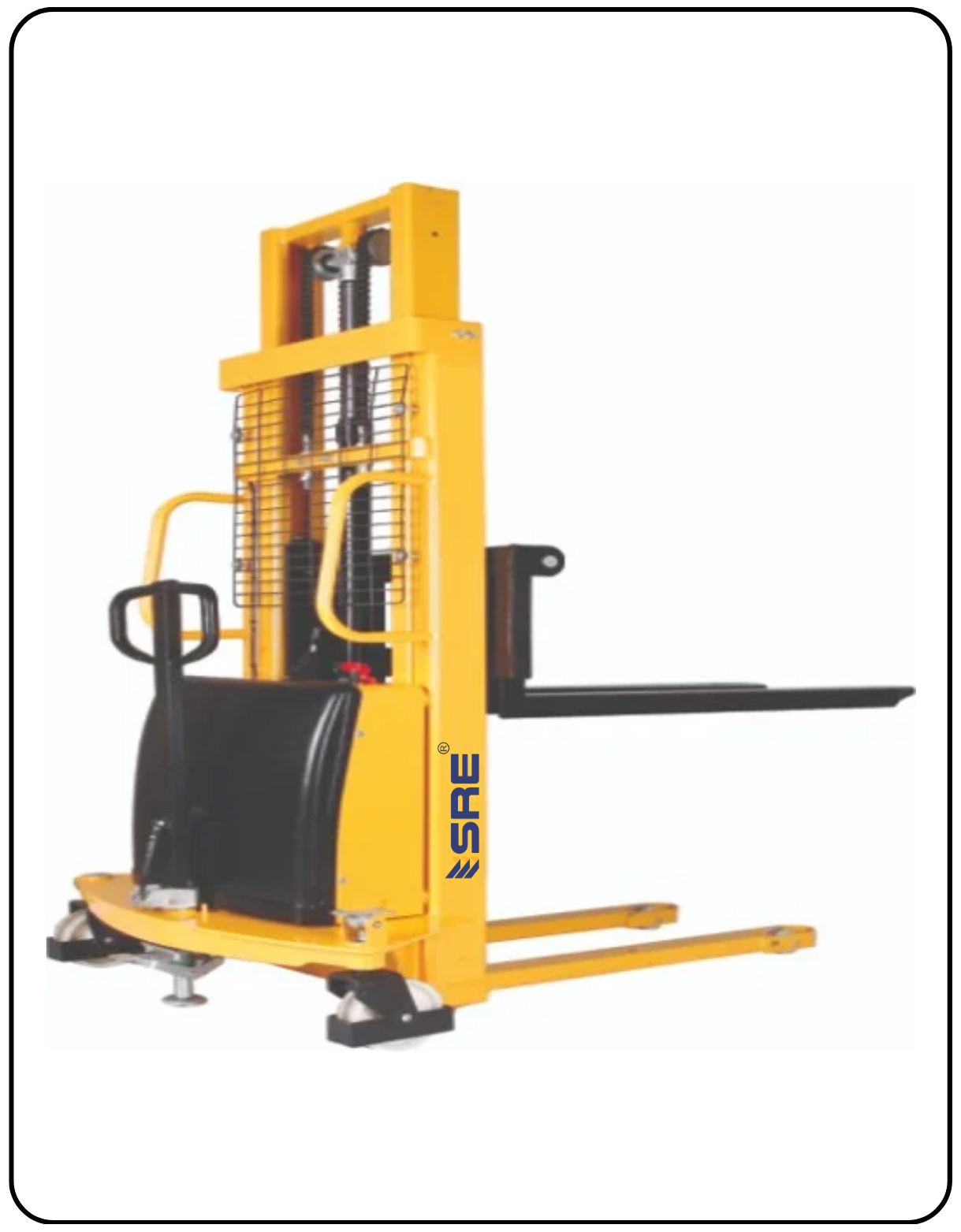
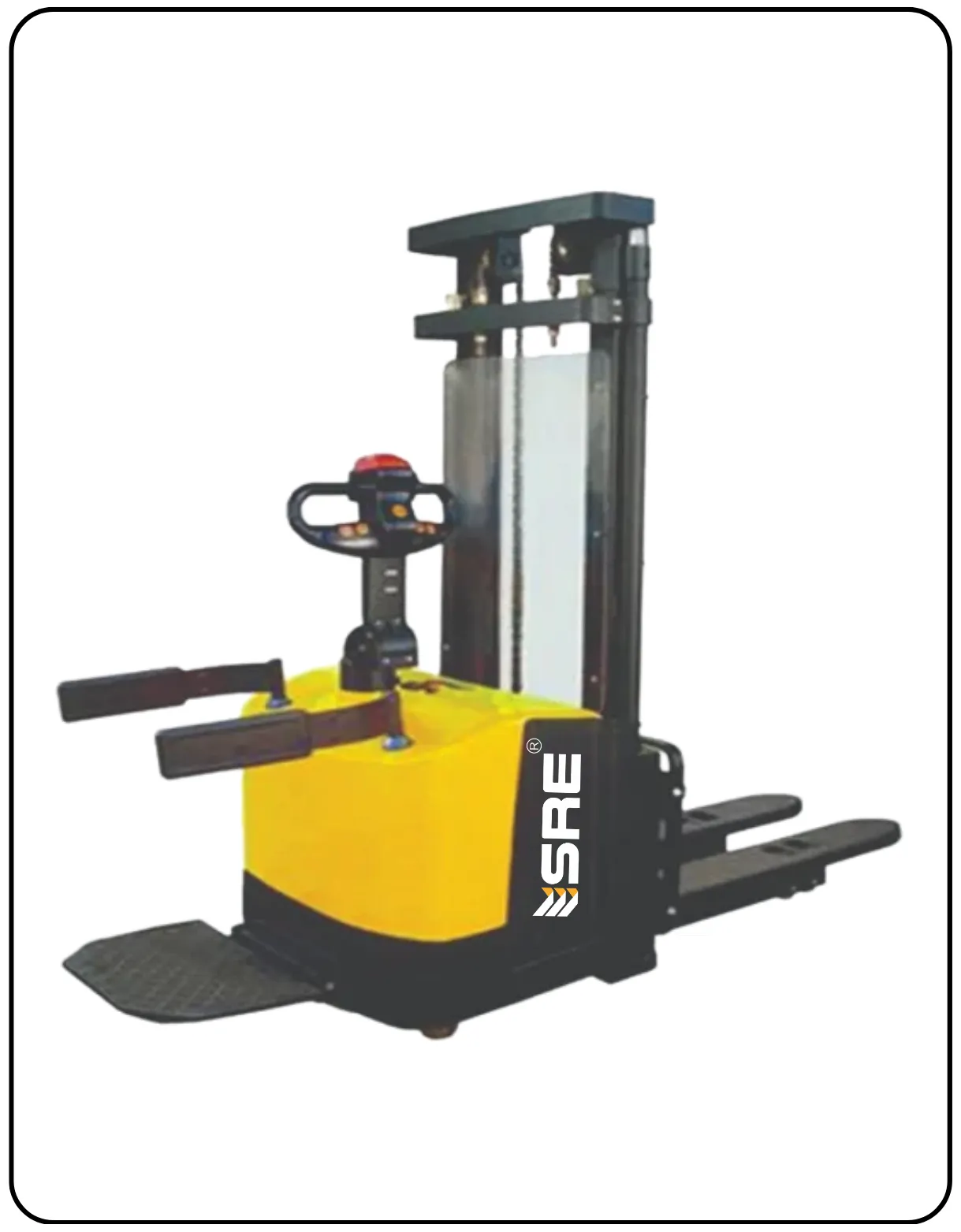
A Semi Battery Stacker is a material handling device designed to lift and move loads (typically palletized goods) more efficiently than manual methods. In industry terms, it sits between a fully manual pallet jack and a fully powered forklift:
- Lifting Assistance: Powered lift mechanisms reduce the physical strain on operators.
- Partial Battery Power: The stacker uses battery assistance for lifting and moving heavier loads but retains simple mechanical controls for straightforward operation.
- Compact Design: Its footprint is optimized for aisle navigation and dense storage setups.
Unlike traditional forklifts — which require extensive training, licensing, and capital — Semi Battery Stackers are intuitive for warehouse workers already familiar with pallet handling. They augment human effort where it matters, without over‑engineering the workflow.
Why Semi Battery Stacker Is Replacing Traditional & Manual Tools
Across industrial facilities, the shift away from manual pallet jacks and hand stacking is rooted in practical experience:
Manual Methods Fall Short
In daily operations, manual pallet jacks and hand stacking have several limitations:
- Fatigue and Injury: Repetitive lifting and lowering accelerate physical fatigue and elevate injury risks.
- Inconsistent Output: Worker performance naturally varies by shift, experience, and workload.
- Slow Lift Cycle: Manual lifting times are slower, especially for heavier or awkward loads.
The Semi Battery Stacker Advantage
A Semi Battery Stacker addresses these issues with practical improvements:
- Reduced Physical Strain: Powered lifting significantly cuts down on operator effort.
- Consistent Movement: Assisted movement ensures repeatable and predictable material handling.
- Faster Throughput: Operators can complete loading, stacking, and retrieval tasks more quickly.
In real terms, this means less downtime per lift, more predictable shift outputs, and fewer interruptions due to fatigue.
Productivity Gains in Daily Operations
When assessing equipment purchases, operations leaders often focus on measurable outcomes — not promise statements. On the warehouse floor, the Semi Battery Stacker delivers tangible productivity improvements that matter daily:
- Faster Load Cycles: Operators spend less time wrestling with loads, reducing cycle time per pallet.
- Steady Output Across Shifts: Whether early morning or late night, powered assistance mitigates the natural dip in manual performance.
- Streamlined Workflows: Teams can handle staging, stacking, and repositioning tasks with fewer handoffs.
In practice, warehouse supervisors report greater throughput during peak periods without the need for overtime or additional workforce. When systems operate smoothly — from inbound freight to put‑away — the cumulative effect on productivity is significant.
Improved Workplace Safety
Safety is a top priority for any industrial facility. In daily operations, lifting‑related injuries are among the most common incidents, often resulting from repetitive strain or sudden load shifts.
A Semi Battery Stacker improves workplace safety by:
- Reducing Manual Strain: Battery‑assisted movement and lift lower the incidence of back and shoulder injuries.
- Controlled Load Movement: Powered systems help stabilize loads during lift and travel.
- Ergonomic Handling: Compact controls and reduced force requirements improve operator comfort and awareness.
From an operational perspective, fewer injuries translate to lower absenteeism, reduced workers’ compensation costs, and a safer work environment. These outcomes support long‑term productivity and workforce retention.
Handling Heavier Loads with Ease
Many warehouses face the challenge of handling heavier pallets and bulkier goods. Traditional tools simply weren’t built for frequent heavy lifting — and forklifts are often overkill for every task.
The Semi Battery Stacker bridges this gap:
- Enhanced Load Capacity: With powered assistance, operators can handle heavier pallets without undue risk.
- Stability and Control: Well‑designed stackers provide balance even at higher lift heights.
- Adaptability: From pallets of raw materials to finished product stacks, these stackers adapt to various load types.
In environments with variable payloads, this versatility helps maintain smooth operations without constantly switching between tools.
Technology & Operational Efficiency
Operational uptime is essential. In the real world, equipment that sits idle due to frequent recharging, maintenance issues, or complex controls undermines efficiency.
Here’s how the Semi Battery Stacker supports reliable operations:
- Battery Power Systems: Dependable battery performance means fewer interruptions during busy shifts.
- Simple Controls: Operators can focus on tasks, not complex control panels.
- Low Maintenance Needs: Compared to heavy forklifts, stackers have fewer moving parts and less specialized service requirements.
Operational leaders benefit from equipment that works consistently — particularly during seasonal or demand spikes.
Space Optimization & Maneuverability
Warehouse layouts increasingly favor high‑density storage to maximize valuable square footage. Traditional forklifts — with their larger turning radius and footprint — are not always well suited to tighter aisles.
Semi Battery Stackers excel here:
- Compact Footprint: Ideal for narrow aisles and dense shelving configurations.
- Responsive Handling: Operators can maneuver in confined spaces without repeated repositioning.
- Flexible Deployment: From racking aisles to dock areas, stackers adapt to multiple environments.
Space optimization isn’t just about storage — it’s about movement efficiency too. A stacker that fits into tighter spaces reduces time spent repositioning and increases usable layout options.
Cost Efficiency Over Time
Procurement decisions should consider total cost of ownership, not just initial purchase price. In this context, the Semi Battery Stacker delivers long‑term value:
- Lower Injury‑Related Costs: Reduced strain injuries and fewer incidents save on indirect costs.
- Less Downtime: Reliable operation reduces time lost to equipment outages.
- Scalable Use: Stackers can serve multiple shifts with minimal overhead.
Compared to both manual tools (which limit capacity) and larger forklifts (which require high operating costs and training overhead), the stacker provides a balanced solution that aligns with budget discipline and operational goals.
Sustainability & Compliance
Modern industrial operations are increasingly evaluated on sustainability metrics and compliance standards. While environmental compliance may not be the first consideration for stacker procurement, energy efficiency and cleaner operation are part of the broader conversation:
- Battery‑Powered, Low Emissions: Semi Battery Stackers support energy efficient operation without the emissions concerns of combustion‑engine equipment.
- Quiet Operation: Lower noise levels improve the work environment, supporting health and safety norms.
- Regulatory Alignment: Using equipment that reduces manual strain and injury risk aligns with occupational safety codes and standards.
For facilities aiming to improve environmental performance while maintaining operational rigor, the stacker fits into a compliance‑minded fleet strategy.
Integration with Warehouse / Factory Workflow
The true value of any material handling equipment lies in how well it integrates into real workflows:
- Inbound Processing: Stackers help move goods from dock to staging racks quickly.
- Put‑Away Efficiency: Assisted lifts speed pallet placement in storage locations.
- Order Fulfillment: Operators can reposition stock with fewer delays.
- Cross‑Docking: Efficient movement between inbound and outbound areas improves cycle times.
Rather than adding complexity, a well‑selected stacker should fit existing processes and elevate throughput without introducing new bottlenecks.
Training, Ease of Use & Maintenance
Operational teams value equipment that doesn’t require long onboarding cycles:
- Straightforward Training: Warehouse workers can become proficient with a Semi Battery Stacker in a short period.
- Intuitive Controls: Simple interfaces reduce operational errors.
- Predictable Maintenance: Service schedules are easy to plan and fit into existing maintenance workflows.
This combination of ease and predictability helps facilities maintain consistent service levels without heavy training investments.
Why Choosing a Reliable Manufacturer Matters
When investing in critical material handling equipment, manufacturer reliability isn’t optional — it’s central to operational uptime.
Here’s what experienced procurement teams look for:
- Quality Assurance: Consistent build quality reduces unexpected failures.
- After‑Sales Support: Quick access to service and parts minimizes downtime.
- Industry Experience: Proven solutions tailored to real operational challenges.
- Compliance & Documentation: Clear specifications support workplace audits and safety programs.
Selecting a partner with deep material handling expertise ensures equipment is not just purchased but deployed effectively throughout its lifecycle.
Conclusion
In the face of rising operational pressure, rising throughput demands, and tighter safety expectations, industrial facilities need solutions that balance power, control, and usability. The Semi Battery Stacker delivers operational value across these dimensions — offering daily productivity gains, improved safety outcomes, and long‑term cost efficiencies.
For warehouses, factories, and logistics centers in Pune and beyond, adopting the right stacker can meaningfully improve internal material flow without imposing new workforce burdens.
If your operations team is evaluating material handling upgrades, consider how a Semi Battery Stacker aligns with your workflow challenges and long‑term efficiency goals. To explore reliable options and expert guidance, visit SRE MATERIAL HANDLING EQUIPMENT PRIVATE LIMITED at https://www.sremhepvtltd.com/
Key Takeaways
- Productivity: Semi Battery Stackers reduce cycle times and sustain output across shifts.
- Safety: Assisted lifting minimizes strain injuries and improves workplace ergonomics.
- Load Handling: Effective for heavier and diverse payloads with better control.
- Cost Efficiency: Balanced total cost of ownership with lower downtime and injury costs.
- Industry Trend: Increasingly common in modern warehouses and factories seeking efficiency without complexity.
Trending F&Q
- What load capacities can a Semi Battery Stacker handle?
Capacities vary by model, but typical industrial stackers support common pallet loads used in warehouse settings without excessive strain on operators.
- How long does the battery last during a shift?
Battery life depends on usage patterns, but quality units support full shift operation with proper charging practices.
- Is special certification required to operate a stacker?
Training is essential, but most Semi Battery Stackers are intuitive and require less formal certification than forklifts.
Reach SRE MATERIAL HANDLING for expert Semi Battery Stacker solutions today. Call +91 9316 208879 or email sremhepvtltd2025@gmail.com
#SemiBatteryStacker #MaterialHandling #WarehouseEquipment #IndustrialLifting #BatteryStacker #WarehouseAutomation #LoadHandling #FactoryEquipment #LogisticsSolutions #LiftEfficiency #WorkplaceSafety #IndustrialOperations