
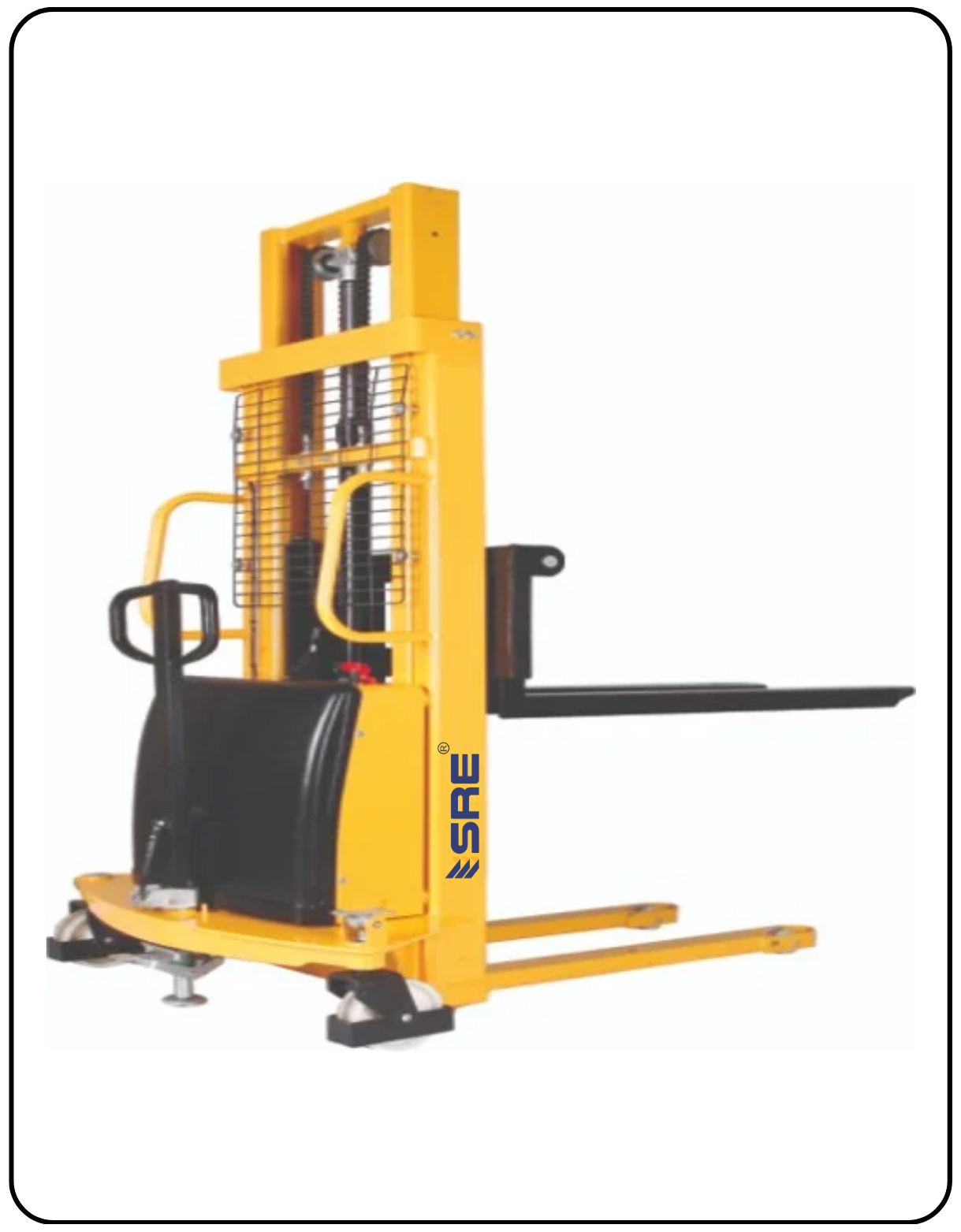
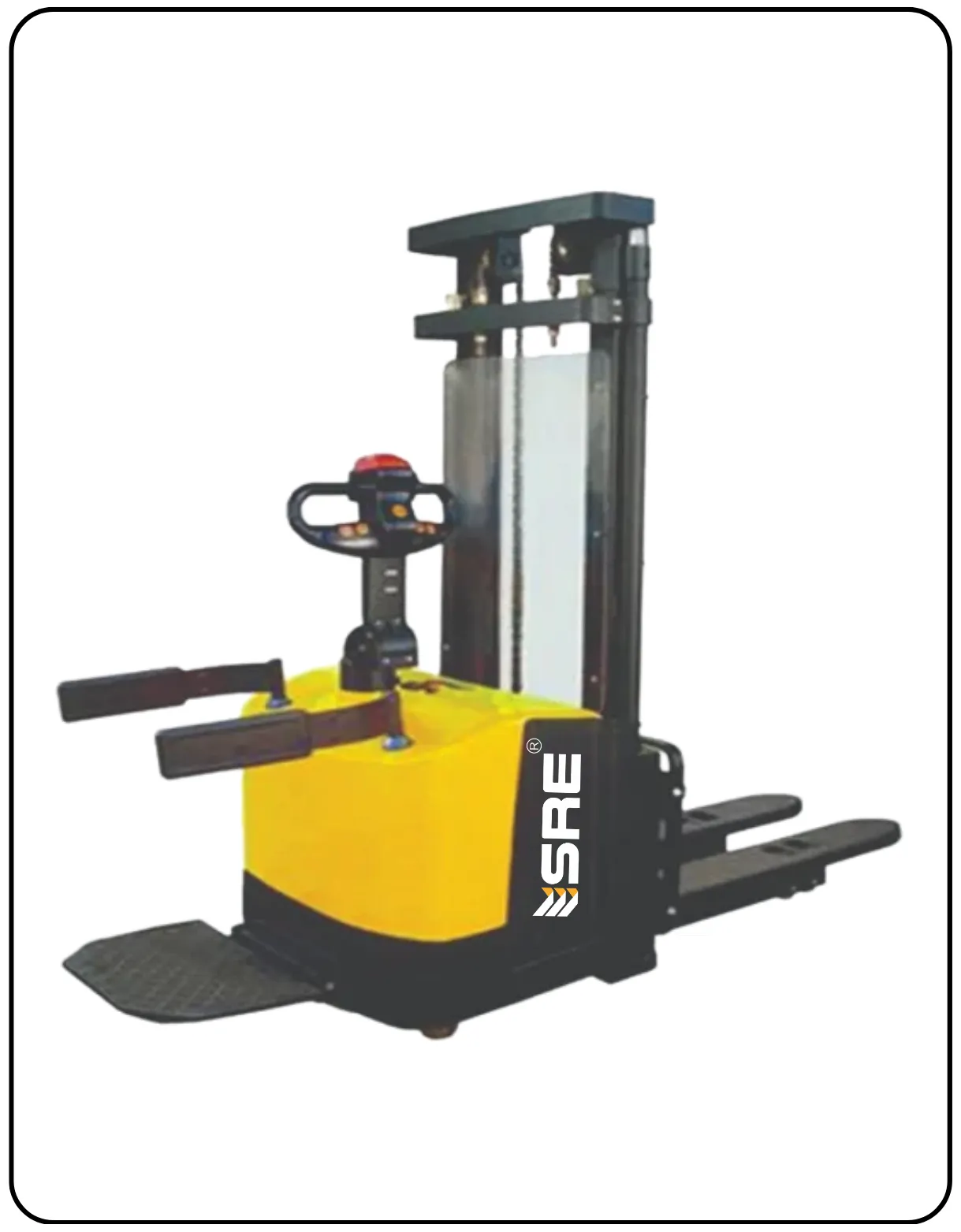
SRE Material Handling Equipment Pvt. Ltd.: Manufacturer, Supplier And Exporter Of Semi Electric Stacker in India.
SRE Material Handling Equipment Pvt. Ltd., Manufacturer And Supplier Of Semi Electric Stacker in Pune.
Our Manufacturing Unit is in Ahmedabad, Vadodara, and Rajkot, Gujarat, India.
Semi Electric Stacker in Pune: Practical Material Handling for Today’s Warehouses
In modern warehouse and industrial operations, the stakes have never been higher. Rising customer expectations, tighter delivery windows, and growing volumes of goods mean internal logistics must be reliable and efficient. At the same time, safety, labor fatigue, and cost control are front‑of‑mind for procurement teams, factory managers, operations heads, and supply‑chain leaders.
Against this backdrop, simple manual handling methods struggle to keep up. Repetitive lifting, twisting, and pallet stacking manually increase fatigue and injury potential, while large forklifts can be too bulky or costly for many applications. This gap has led many Pune‑based industrial users to adopt the Semi Electric Stacker, a practical, purpose‑built solution that balances performance, safety, and cost‑effectiveness in real-day-to-day operations.
The Changing Needs of Modern Warehouses & Industries
Warehouse and factory landscapes are not static. Over the past decade:
- Order volumes have surged, with e‑commerce, automotive parts, FMCG, pharma, and retail warehouses handling thousands of pallets daily.
- Speed and accuracy have become non‑negotiable, especially during peak seasons or just‑in‑time supply chains.
- Labor availability and safety concerns are more prominent than ever.
In daily warehouse operations, teams face tasks such as unloading inbound trucks, stacking pallets on racks, repositioning goods for picking, and preparing outbound loads. Each task may involve repetitive lifting and vertical placement of medium to heavy loads, work that is time‑critical yet physically demanding.
Decision‑makers are looking for tools that reduce bottlenecks, protect workers, and deliver consistent performance without over‑investing in equipment that doesn’t fit their workload patterns.
What Is a Semi Electric Stacker?
At its core, a Semi Electric Stacker is a hybrid material‑handling machine designed to make lifting heavy loads easier and safer. It combines:
- An electric lifting mechanism to raise and lower pallets or goods, reducing the physical effort required by operators.
- Manual movement and steering operators push or pull the stacker to position it, rather than relying on powered travel like fully electric models.
- This blend of electric lift and manual travel strikes a practical balance: it reduces operator strain without the complexity and cost associated with fully electric trucks.
Why a Semi Electric Stacker Is Replacing Traditional / Manual Equipment
Operators in Pune’s warehouses often spend hours each shift handling pallets, a task that, when done manually, leads to fatigue, inconsistency, and safety risks. Manual pallet trucks or hydraulic stackers require repeated physical input, especially at mid‑to‑high lifting levels.
In contrast, a semi electric stacker:
- Reduces physical strain on workers by automating the lift action, so operators no longer pump hydraulics repeatedly.
- Delivers consistent performance across shifts, without the variability that comes with manual effort.
- Bridges the gap between purely manual tools and expensive fully electric systems, offering a practical upgrade path.
For facilities where loads are lifted and stacked frequently, this change translates into less downtime, fewer breaks for operator recovery, and smoother overall workflows.
Productivity Gains in Daily Operations
In everyday operations, a semi electric stacker contributes to measurable improvements:
- Faster lift cycles: Electric lifting often completes in seconds compared to manual pumping, which can take multiple cycles.
- More consistent workflow: Operators spend less time physically recovering and more time moving goods, which is important when shifts overlap or multiple operators share equipment.
- Quick onboarding: Because steering remains manual and control logic is intuitive, new staff can be productive quickly with minimal specialized training.
A stacker that elevates goods efficiently allows warehouses to process more pallets per hour, a key differentiator when managing daily order fulfillment or replenishment.
Improved Workplace Safety
Handling heavy loads manually increases the risk of back strains, slips, and repetitive stress injuries. A semi electric stacker helps reduce these risks by:
- Taking the heavy lifting off the operator, so fewer injuries are tied to fatigue and awkward postures.
- Improving ergonomic handling through better reach and positioning.
- Delivering predictable movement so that operators can focus on safe navigation and placement rather than exertion.
These benefits support compliance with safer workplace practices and contribute to a healthier workforce.
Handling Heavier Loads with Ease
Modern warehouses often store standard pallets weighing up to 1500 kg or more. Semi electric stackers typically support load capacities in this range, allowing operators to handle:
- Raw materials on manufacturing floors.
- Finished goods are ready for shipment.
- Bulk pallets in distribution centers.
By integrating a powered lift with robust mast construction and stable fork operation, these stackers improve control over heavier loads , especially when stacking onto or retrieving from mid‑to‑high racking systems.
Technology & Operational Efficiency
Semi electric stackers incorporate practical technology that enhances uptime and reliability:
- Electric lift powered by dependable motors and battery systems, offering smooth, repeatable lift performance.
- Low‑maintenance components, since there’s no powered drive system to service.
- Common charging systems use standard outlets, which reduce infrastructure requirements.
These machines are designed for operational reliability , especially for warehouses that must maintain throughput without frequent breakdowns.
Space Optimization & Maneuverability
Space matters, particularly in Pune’s industrial areas, where facilities may operate in tighter footprints. Semi electric stackers are:
- Compact and highly maneuverable, with tight turning radii that let operators work in narrow aisles.
- Able to utilize vertical space effectively, stacking goods where forklifts may be too large or cumbersome.
- This means more efficient use of floor and rack space without costly layout changes.
Cost Efficiency Over Time
While upfront cost is always a consideration, a semi electric stacker delivers long‑term value by:
- Reducing labor stress and associated injury costs.
- Lowering downtime and maintenance expense compared to more complex machines.
- Avoiding over‑investment for operations that don’t require full electric travel power.
For many industrial buyers, the total cost of ownership spanning purchase, operation, and maintenance favors semi electric stackers for moderate lifting and stacking requirements.
Sustainability & Compliance
With growing emphasis on cleaner warehouse operations, semi electric stackers contribute by:
- Operating without fossil fuels, eliminating emissions in indoor environments.
- Reducing noise pollution improves working conditions and supports compliance with workplace standards.
- These qualities align with broader sustainability and occupational health goals that are increasingly important in modern supply chains.
Integration with Warehouse / Factory Workflow
Integrating a semi-electric stacker doesn’t require a major process redesign. These machines fit naturally into:
- Receiving and staging areas.
- Shelf stacking for inventory storage.
- Cross‑docking and dispatch preparation.
Because operators use them alongside existing tools and processes, disruption is minimal, and benefits are apparent quickly.
Training, Ease of Use & Maintenance
One of the practical advantages of semi electric stackers is that they are straightforward to operate and maintain:
- Minimal training is needed due to intuitive controls and familiar handling patterns.
- Predictable maintenance focuses on battery care and periodic inspection of hydraulic and lifting mechanisms.
- Fewer moving parts translate to fewer breakdowns and predictable service routines.
This simplicity supports consistent operational readiness.
Why Choosing a Reliable Manufacturer Matters
When selecting a semi electric stacker, quality and support are essential. A reliable manufacturer brings:
- Engineering expertise suited to specific load conditions and facility layouts.
- After‑sales support including training and parts availability.
- Compliance with quality and safety standards, ensuring long‑term reliability.
Look for vendors with deep industry experience and a robust support network to ensure your investment delivers value over time.
Conclusion
In real warehouse and factory contexts, the Semi Electric Stacker has emerged as a practical, balanced material‑handling solution. It addresses core operational constraints from speed and fatigue to safety and space while aligning with cost and sustainability priorities that matter to industrial decision‑makers.
If your team in Pune is evaluating ways to upgrade material handling performance without over‑extending budgets or operational complexity, exploring a semi electric stacker is a sensible next step.
To explore reliable solutions tailored to your facility’s needs, visit SRE MATERIAL HANDLING EQUIPMENT PRIVATE LIMITED a partner grounded in practical material handling expertise.
Key Takeaways
- Productivity: Semi electric stackers speed up vertical lifting and consistent workflow.
- Safety: Reduces physical strain and supports safer handling of heavy loads.
- Load Handling: Effective for medium‑duty loads and frequent stacking tasks.
- Cost Efficiency: Balanced initial investment with long‑term operational value.
- Industry Trend: Increasingly adopted as a practical alternative to purely manual or fully electric equipment.
Trending F&Q
Q: Are semi electric stackers suitable for narrow aisles?
Yes, their compact design and tight turning radius make them well‑suited for space‑constrained warehouse aisles.
Q: How does a semi electric stacker differ from a fully electric one?
A semi electric stacker uses electric power for lifting but manual force for movement, whereas fully electric models automate both lifting and driving.
Q: What capacity should I consider for typical warehouse use?
Common models range from roughly 1000 kg to 1500 kg lifting capacity, suitable for most palletized goods in medium‑volume operations.
Get in touch with us today for expert material handling solutions. Call +91 9316 208879 or email sremhepvtltd2025@gmail.com
#SemiElectricStacker #MaterialHandling #WarehouseEfficiency #IndustrialEquipment #SREMaterialHandlingEquipmentPrivateLimited #Pune #SupplyChain #WarehouseOperations #LoadHandling #Safety #OperationalEfficiency #EquipmentROI