
SRE Material Handling Equipment Pvt. Ltd.: Manufacturer, Supplier And Exporter Of Pit Mounted Scissor Lift Table in Gujarat.
SRE Material Handling Equipment Pvt. Ltd., Manufacturer And Supplier Of Pit Mounted Scissor Lift Table in Ahmedabad.
Our Manufacturing Unit is in Ahmedabad, Vadodara, and Rajkot, Gujarat, India.
Pit Mounted Scissor Lift Table in Ahmedabad: A Practical Guide for Industrial Decision‑Makers
In daily warehouse and factory operations, meeting demand with speed and safety is a constant balancing act. Over the past decade, operations have evolved from manual, labour-intensive methods to more mechanized and data‑driven workflows. Businesses face pressure not only to deliver faster but to do so with fewer injuries, less fatigue, and greater consistency.
One solution increasingly adopted in modern facilities is the Pit Mounted Scissor Lift Table. In this blog, we’ll explore why it matters, how it solves real operational challenges, and what industrial teams in Ahmedabad should consider when evaluating this equipment.
The Changing Needs of Modern Warehouses and Industrial Facilities
Warehouses and factories are no longer static storage zones. They are high‑throughput environments where goods move constantly—from receiving docks to storage to packing and shipping.
Rising Operational Pressures
Across industries, volume growth and tighter delivery deadlines are standard. In daily operations:
- Teams must handle larger batches with fewer errors.
- Turnaround times are compressed to support e‑commerce and just‑in‑time logistics.
- Labour availability fluctuates, increasing reliance on equipment to maintain output.
These pressures expose weaknesses in traditional workflows—especially those that depend on manual lifting or improvised equipment. Forklift staging areas, manual lift tables, and ramps can create bottlenecks and variability in task throughput.
Workflow and Internal Logistics Challenges
Common pain points include:
- Excessive time spent moving heavy pallets between levels
- Inconsistent handling procedures across shifts
- Elevated risk of strains and injuries among workers
- Difficulty maintaining pace on high‑volume days
In this context, a Pit Mounted Scissor Lift Table becomes a practical asset, bridging vertical gaps efficiently and safely without interrupting workflow continuity.
What Is a Pit Mounted Scissor Lift Table?
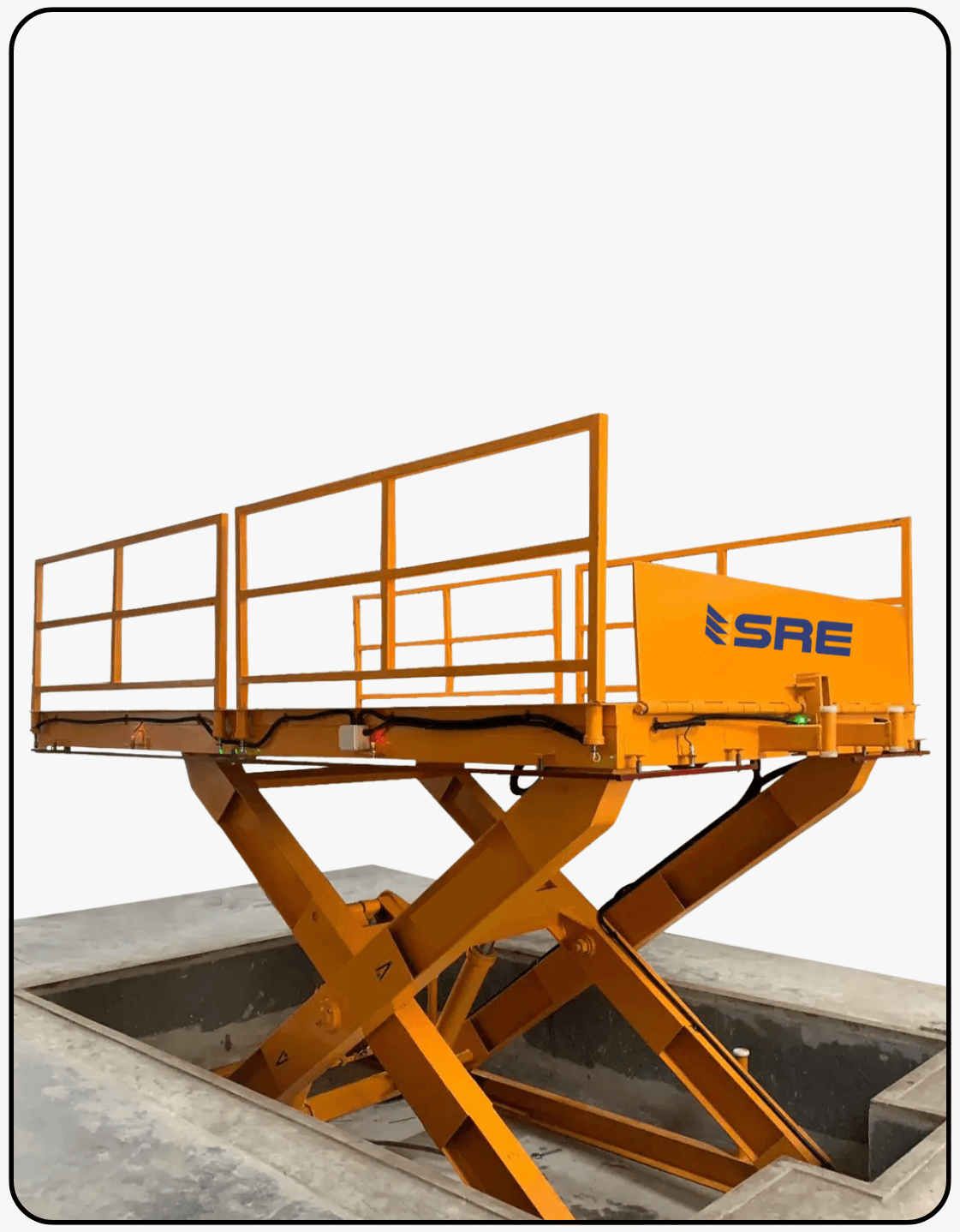
Simply put, a Pit Mounted Scissor Lift Table is a lift platform installed flush with the floor in a recessed pit. When activated, it rises to elevate goods (and sometimes operators) between levels—such as from a warehouse floor to a dock or mezzanine.
Unlike standalone mobile lifts or ramp‑based staging, this system integrates into the facility’s floor plan. The “scissor” mechanism refers to the crisscrossing support arms that extend upward to raise the platform smoothly and steadily.
This isn’t a textbook definition. In real warehouse terms, it means you can position a pallet at ground level and elevate it to the next work surface without awkward tilts, unnecessary handling, or extensive space requirements.
Why Pit Mounted Scissor Lift Tables Are Replacing Traditional Manual Methods
In many industrial settings, teams still rely on manual lift tables, ramps, or forklift maneuvers to bridge elevation differences. These methods carry drawbacks:
- Physical Strain: Manual lifting or repositioning goods places significant stress on workers, contributing to fatigue and musculoskeletal injuries.
- Inconsistency: Manual techniques depend on individual strength and technique, leading to variable cycle times and potential errors.
- Workflow Interruptions: Ramps and staging areas take up space and require manual traffic management, slowing down throughput.
By contrast, a Pit Mounted Scissor Lift Table automates vertical movement in a controlled way. Levels are reached with a press of a button, reducing variability and supporting consistent handling across shifts.
Productivity Gains in Daily Operations
One of the most tangible benefits of a Pit Mounted Scissor Lift Table is improved throughput.
Time Savings
In practice:
- Loading and unloading times drop because goods move vertically without repositioning.
- Shift handovers become smoother due to standardized movement procedures.
Repetitive tasks that once caused bottlenecks (e.g., pallet transfers to elevated docks) proceed without manual intervention.
Operations managers often note an immediate difference in cycle times once a lift table is in place. On high‑volume days, these gains compound, helping teams meet deadlines with less firefighting.
Consistent Output Across Shifts
Equipment like this brings uniformity to tasks that were once dependent on individual workers’ strength and stamina. A Pit Mounted Scissor Lift Table ensures that throughput remains steady, whether it’s a morning rush or a night shift—reducing variability in output.
Improved Workplace Safety
Daily operations involve inherent risks. Manual lifting, awkward postures, and repetitive movements contribute to common injuries on warehouse floors. Mounted Scissor Lift Tables address these concerns in a few practical ways:
- Controlled Movement: Hydraulic or electric control systems ensure gradual, smooth motion, reducing the risk of sudden jolts.
- Ergonomic Handling: Workers no longer need to lift or pivot heavy loads manually at awkward heights.
- Reduced Overexertion: By handling vertical motion, the lift table takes the pressure off muscles and joints.
In facilities where injury reduction is a priority—not just a compliance checkbox—this equipment plays a meaningful role in creating safer workflows.
Handling Heavier Loads with Ease
Modern warehouses handle heavier, denser loads driven by larger product formats and consolidated shipments. Traditional lift tables and manual methods reach their limits quickly.
A Pit Mounted Scissor Lift Table is designed with this reality in mind:
- It supports heavier pallet loads without compromising stability.
- The scissor mechanism distributes weight evenly, minimizing stress on the platform.
- Operators can position and secure loads before movement, improving control.
This stability matters in environments where goods are heavy and fragile, such as industrial components, electronics, or packed retail items.
Technology and Operational Efficiency
The mechanics behind a Pit Mounted Scissor Lift Table influence uptime and reliability.
Power Systems
Most modern tables use hydraulic or electromechanical systems:
- Hydraulic systems deliver a consistent lifting force and controlled descent.
- Electric actuators offer precise control with less maintenance.
In high‑duty environments, these systems contribute to predictable uptime if maintained appropriately.
Reliability and Uptime
In practical terms, this means:
- Less unplanned downtime due to equipment failure
- Predictable maintenance cycles
- Minimal disruption to high‑frequency workflows
For operations heads, a reliable lift table becomes part of a broader strategy to increase equipment availability and flow reliability.
Space Optimization and Maneuverability
Space on a warehouse floor is valuable. Anything that reduces clutter while improving throughput is beneficial.
A Pit Mounted Scissor Lift Table offers:
- Flush installation: The table sits level with the floor when not in use, eliminating obstructions.
- Compact footprint: Because it’s sunk into the floor, it doesn’t consume horizontal space like ramps or bulky platforms.
- Narrow‑aisle usability: It can integrate into tighter layouts where floor space is at a premium.
In facilities where every square meter counts, this feature helps teams maintain nimble internal logistics without sacrificing capability.
Cost Efficiency Over Time
Cost evaluations should always look beyond the initial purchase price. Long‑term value is where real decisions are made.
Reduced Injuries and Associated Costs
Injury reduction leads to:
- Lower workers’ compensation claims
- Fewer lost workdays
- Reduced overtime to cover for injured staff
These savings alone can justify the investment in mechanized lifting solutions.
Lower Labour Fatigue
When staff expend less physical effort on repetitive lifts, they maintain productivity longer and with fewer errors.
Minimized Downtime
Reliable equipment supports smooth schedules, improving overall throughput and service levels.
Over time, facilities that invest in the right handling equipment often see measurable improvements in performance metrics and operating costs.
Sustainability and Compliance
Today’s industrial leaders also balance productivity with environmental and regulatory considerations.
- Cleaner operations: Modern electric or hydraulic systems run cleaner than improvised solutions.
- Energy efficiency: Efficient drive systems consume minimal power relative to the workload handled.
- Compliance readiness: Equipment designed with safety standards in mind helps facilities stay aligned with workplace safety regulations.
For procurement teams and compliance officers, these factors contribute to a lower risk profile and a more sustainable operation.
Integration with Warehouse and Factory Workflow
A Pit Mounted Scissor Lift Table doesn’t operate in isolation. It must integrate into existing workflows:
- Receiving docks: Elevate incoming pallets to staging areas.
- Mezzanines: Transfer goods between levels without forklift dependency.
- Packing lines: Adjust work heights dynamically for ergonomic picking and packing.
Operations teams should plan lift table placement based on material flow, avoiding congestion and enabling seamless movement between key zones.
Training, Ease of Use, and Maintenance
No equipment adds value if it’s too complicated to use.
Simple Operation
Most lift tables use straightforward controls:
- Button or joystick activation
- Clear up/down commands
- Safety interlocks to prevent misuse
These features make it easy for operators to adopt the unit quickly with minimal training.
Predictable Maintenance
Routine checks include:
- Inspecting hydraulic lines or electrical components
- Ensuring smooth platform movement
- Verifying safety interlocks
With basic preventive maintenance, these systems can deliver reliable service over many years.
Why Choosing a Reliable Manufacturer Matters
Selecting the right manufacturer influences equipment performance long after installation.
Key considerations include:
- Experience in industrial equipment design
- Availability of local service and support
- Compliance with safety and quality standards
- Responsiveness to operational feedback
A manufacturer that understands real warehouse challenges can guide teams in specifying the right capacity, size, and control options for their unique facility needs.
Conclusion
In Ahmedabad’s dynamic industrial landscape, where throughput, safety, and cost‑effectiveness are daily priorities, the Pit Mounted Scissor Lift Table stands out as a practical, productivity‑enhancing solution. It addresses real challenges—from fatigue and injuries to space constraints and workflow efficiency—without relying on marketing hype or unrealistic claims.
If you’re exploring reliable solutions in this category, learn more about practical, well‑engineered options from #SRE MATERIAL HANDLING EQUIPMENT PRIVATE LIMITED by visiting https://www.sremhepvtltd.com/.
Key Takeaways
- Productivity: Reduces cycle times and standardizes workflows across shifts.
- Safety: Improves ergonomics and lowers the risk of manual lifting injuries.
- Load Handling: Supports heavier loads with controlled, stable lifts.
- Cost Efficiency: Delivers value through reduced downtime and lower labour fatigue.
- Industry Trend: Increasingly adopted as facilities seek smarter, safer material handling.
Frequently Asked Questions (Trending)
Q1: How does a pit mounted scissor lift table improve ergonomics?
A1: By minimizing manual lifting and enabling goods to be positioned at optimal working heights, it substantially reduces strain on workers during repetitive tasks.
Q2: Can these lift tables handle pallets of different sizes?
A2: Most models are designed with adjustable platforms or loading zones to accommodate common industrial pallet dimensions.
Q3: What maintenance is typically required?
A3: Routine inspection of hydraulic or electric components, lubrication of pivot points, and safety system checks help maintain reliable performance.
Q4: Is professional installation necessary?
A4: Yes—pit installation requires precise levelling and structural support, so experienced technicians should handle setup.
Q5: How do I choose the right capacity?
A5: Assess your heaviest typical load plus a safety margin, and consult with manufacturers to match lift capacity with your expected workload.
Get in touch with us for expert material handling solutions. Call +91 9316 208879 or email sremhepvtltd2025@gmail.com