
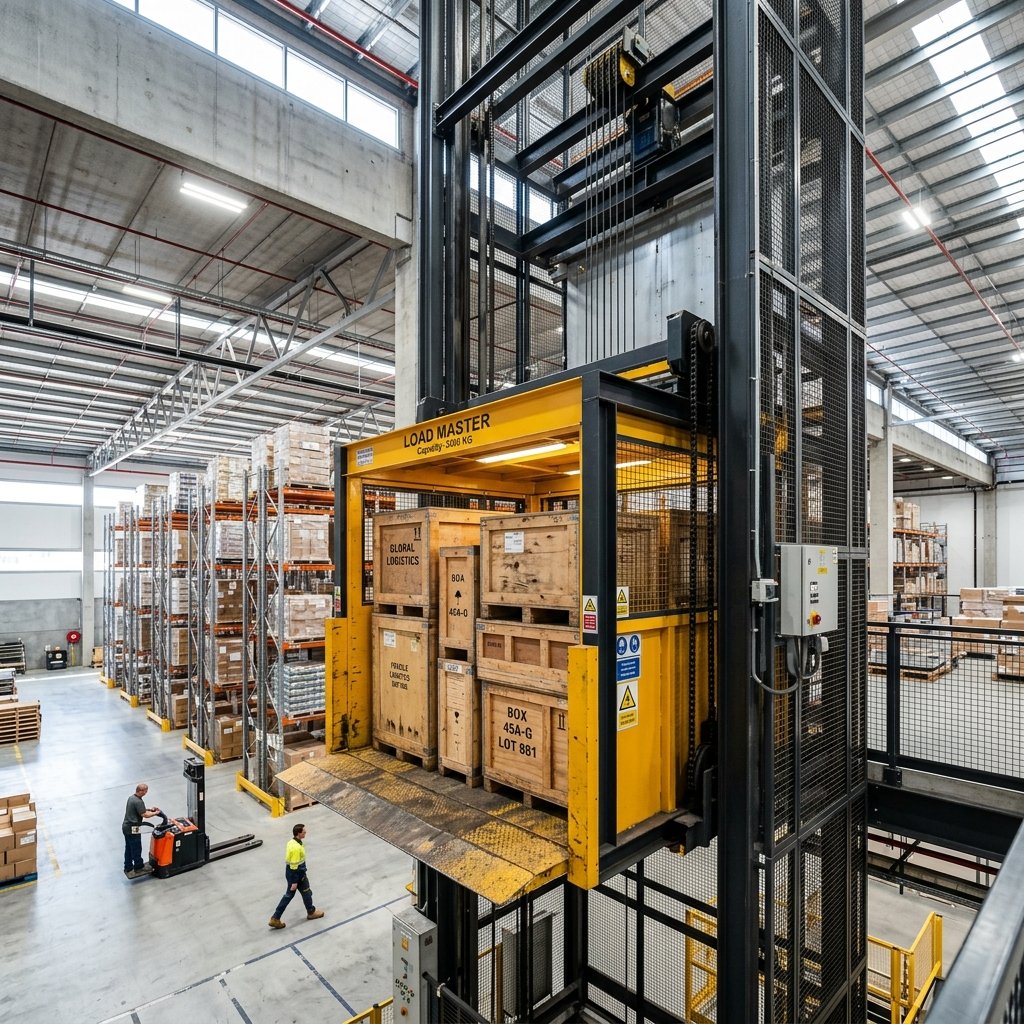
Industrial material handling in modern warehouses and multi-tier production facilities demands high safety standards, fail-safe hydraulic engineering, and precise floor leveling. This comprehensive technical guide analyzes how to choose, specify, and maintain heavy-duty hydraulic goods lifts and scissor lift tables for high-throughput manufacturing plants.
Key Engineering Takeaways
- Dual-mast and wall-mounted hydraulic goods lifts support payload capacities from 500 kg up to 5,000 kg across heights of 3 to 18 meters.
- Pit-mounted scissor lift tables provide flush floor loading for electric pallet trucks and fork trucks without requiring civil ramp incline.
- Critical safety interlocks include hose burst rupture check valves, mechanical rope slack emergency brakes, and electro-magnetic landing door locks.
1. Understanding Payload Dynamics and Platform Sizing
When sizing an industrial cargo elevator, engineers must account not just for static gross payload, but dynamic shock loading caused by manual pallet jacks and motorized ride-on fork trucks rolling onto the cabin cantilever edge.
At SRE LIFTECH, our goods lift cabins are fabricated from heavy-duty IS-2062 structural steel channels with 4.5mm to 6.0mm chequered anti-skid floor plates, reinforced with longitudinal gussets to resist deflection under concentrated wheel point loads.
2. Civil Shaft Requirements: Pit Depth and Overhead Headroom
Depending on facility floor constraints, engineers can choose between standard pit-mounted designs and shallow pit / pitless goods lifts:
- Standard Civil Pit: A pit depth of 350mm to 600mm allows the cabin floor to align perfectly flush with the ground level.
- Pitless / Low-Profile Design: Incorporates a low-angle toe ramp (approx. 100mm) for facilities with post-tensioned slabs or leased warehouse floors where civil excavations are prohibited.
- Overhead Headroom: Minimum top floor clearance of 2,800mm to 3,200mm ensures complete clearance for hoist cylinders and cylinder top over-travel buffers.
3. Hydraulic Power Pack Selection and Pressure Calculations
The core reliability of a heavy freight elevator lies in the hydraulic circuit engineering. SRE LIFTECH power packs feature:
- Submerged high-torque induction motors with quiet gear or vane pumps.
- Integrated pressure relief valves set at 115% of nominal maximum working load.
- Down-speed throttle control valves ensuring smooth, bump-free deceleration and landing accuracy of ±3mm.
- Dual safety check valves to prevent uncommanded platform descent in the event of power outages.
4. Mandatory B2B Safety Interlocks & Compliance Checklist
Industrial safety regulations (IS 14665 & CE guidelines) require comprehensive electrical and mechanical safety devices:
- Electro-Mechanical Landing Door Interlocks: Prevents any door from opening unless the cabin is safely leveled at that specific landing.
- Hose Burst Protection Valve: Instantly locks hydraulic fluid discharge at the base of the cylinder if hydraulic line pressure drops abruptly.
- Emergency Stop & Limit Switches: Top and bottom over-travel limit switches coupled with audio-visual alarm indicators on all operating panels.
5. Preventive Maintenance Schedule for Maximum Operational Uptime
Implementing a structured bi-monthly inspection routine ensures 99.8% plant uptime. Key inspection checkpoints include verifying hydraulic oil ISO VG 68 cleanliness, tightening wire rope equalizer clamps, lubricating guide shoe teflon liners, and inspecting pressure gauge readings under full test load.
Need Custom Engineering Specifications?
Request custom CAD drawings, load capacities, and instant B2B quotes.